

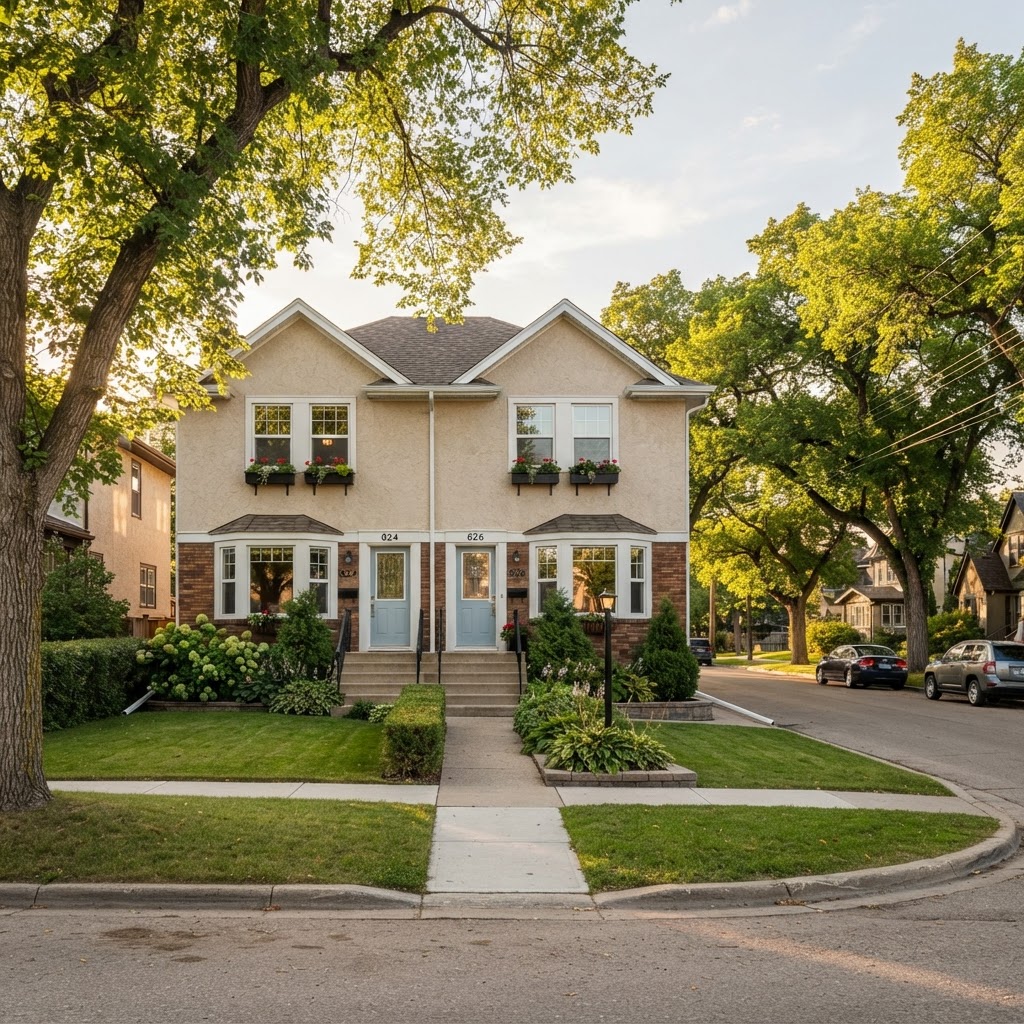
Somewhere between a first home and a commercial portfolio sits the purchase that turns a homeowner into an investor: the duplex, the side-by-side, the small apartment block. Winnipeg has long been attractive for exactly this move — a city with a deep stock of multifamily housing, a stable rental base, and entry prices that don't require a fortune to get started. But a rental property is a business, not a bigger house, and the buyers who succeed treat it that way from the first showing. Here's what to understand before you buy your first income property in Winnipeg.
The Number That Runs the Business: Income Minus Expenses
Everything about an income property flows from one calculation: what it earns versus what it costs to operate. Rental income, minus operating expenses — property taxes, insurance, maintenance, utilities you carry, management, and an honest allowance for vacancy — gives you the property's net operating income (NOI). Subtract your mortgage payments from that and you have your actual cash flow.
Two disciplines separate real analysis from wishful thinking. First, use actual numbers, not the listing's pro forma — demand real rent amounts, current leases, and utility bills during your conditions. Second, budget for the building you're buying, not the building you hope it is: older Winnipeg multifamily stock is full of solid buildings, but boilers, roofs, and hundred-year-old wiring all appear on someone's schedule eventually. If you want the full framework for how income drives what a property is worth, read our article on cap rates and NOI — it applies to a duplex exactly as it does to a warehouse.
Financing: The Rules Change With the Door Count
How lenders treat your purchase depends heavily on the number of units and whether you'll live there. Small buildings (up to four units) are generally financed as residential — and if you occupy one unit, you may qualify with a significantly lower down payment under insured-mortgage rules, with a portion of the rental income helping you qualify. Buy the same building purely as an investment, and expect a larger down payment and sharper underwriting. At five or more units, you're in commercial mortgage territory: the building's income becomes the star of the application, terms differ, and CMHC's multifamily programs may enter the conversation.
The practical takeaway: the owner-occupied duplex or triplex is one of the most accessible entries into real estate investing available to Winnipeggers — a strategy often called house hacking, and a familiar first step for many of the city's landlords. Talk to a broker who handles rental properties early; the financing path shapes which buildings you should even be viewing.
Know the Rules: Manitoba's Residential Tenancies Framework
Being a landlord in Manitoba means operating inside the rules of The Residential Tenancies Act, administered by the province's Residential Tenancies Branch (RTB). Before you buy — not after — understand the essentials: how tenancy agreements and security deposits work, the notice and process requirements for entering a unit, how and when rent can be increased (Manitoba sets an annual rent increase guideline, and some units — including many newer buildings — are exempt; verify the current rules and your building's status with the RTB), and what the process actually looks like when a tenancy goes wrong.
None of this should scare you off — thousands of small landlords operate successfully in Winnipeg — but the ones who struggle are usually the ones who learned the rules mid-dispute. The RTB publishes plain-language guides; read them before your first offer. And when you buy a building with existing tenants, remember you inherit their tenancy agreements as-is: their rents, their terms, and their deposits, which must be properly accounted for at closing.
Due Diligence: A Small Building Deserves Big-Building Homework
A multifamily purchase sits closer to a commercial transaction than a home purchase, and your due diligence should reflect it. Verify every lease and match it to actual deposits and rent payments. Inspect every unit — not a sample. Pay attention to the systems that serve the whole building: heating plant, electrical service and panels, plumbing stacks, roof. Confirm with the City of Winnipeg that the unit count is legal — a "raised bungalow with basement suite" is only a duplex if it's actually approved as one — and that the property meets fire-safety requirements for its use. Budget your insurance early too: rental property coverage differs from homeowner's insurance, and older multifamily buildings can carry meaningful premiums. Our commercial due diligence guide covers the deeper checklist, and most of it scales down perfectly to a four-plex.
Where Winnipeg Fits In
Winnipeg's multifamily stock is spread across the city, but certain areas have long traditions of it — the West End, Wolseley, and St. Boniface for character conversions and older walk-ups; Elmwood, the North End, and Transcona for affordable duplexes and side-by-sides; St. James and the Kildonans for post-war stock with suites. Each area rents to a different tenant profile at a different price point, and the right choice depends on whether you're optimizing cash flow, tenant stability, or long-term appreciation. That's a neighbourhood-by-neighbourhood conversation — exactly the kind I'm happy to have.
Frequently Asked Questions
How much down payment do I need for a rental property in Manitoba?
It depends on the structure of the purchase: owner-occupied small multifamily can qualify for insured financing with a much lower down payment, pure investment purchases of 1–4 units typically require substantially more down, and buildings of five or more units are financed commercially on different terms. A broker can map your specific options quickly.
Is a duplex a good first investment property?
For many Winnipeg buyers, yes — especially owner-occupied. You get accessible financing, a tenant helping carry the mortgage, and landlord experience at a manageable scale. The trade-off is living beside your tenant, which suits some owners perfectly and others not at all.
Do I need a property manager?
Not necessarily at small scale — many Winnipeg landlords self-manage a duplex or triplex. But budget for management anyway (whether you hire it or pay yourself in time), because a property that only cash-flows when you work for free isn't really cash-flowing.
Ready to Look at the Numbers?
I help Winnipeg buyers evaluate income properties the way investors do — real rents, real expenses, honest reserves — and I'll tell you plainly when a building's numbers don't work. I've completed the CCIM Institute's full curriculum in financial analysis, market analysis, and investment analysis for commercial real estate, and that framework applies from your first duplex to your first apartment block.
Mark Goldade, CD — REALTOR®
Mark Goldade Personal Real Estate Corporation · Royal LePage Prime Real Estate
1877 Henderson Highway, Winnipeg, Manitoba R2G 1P4
Cell 431-306-2240 · Office 204-989-7900 · mark@goldaderealtor.com
This article is general information, not financial, legal, or tax advice. Financing rules, tenancy regulations, and program details change — verify current requirements with your lender, lawyer, and the Residential Tenancies Branch.