

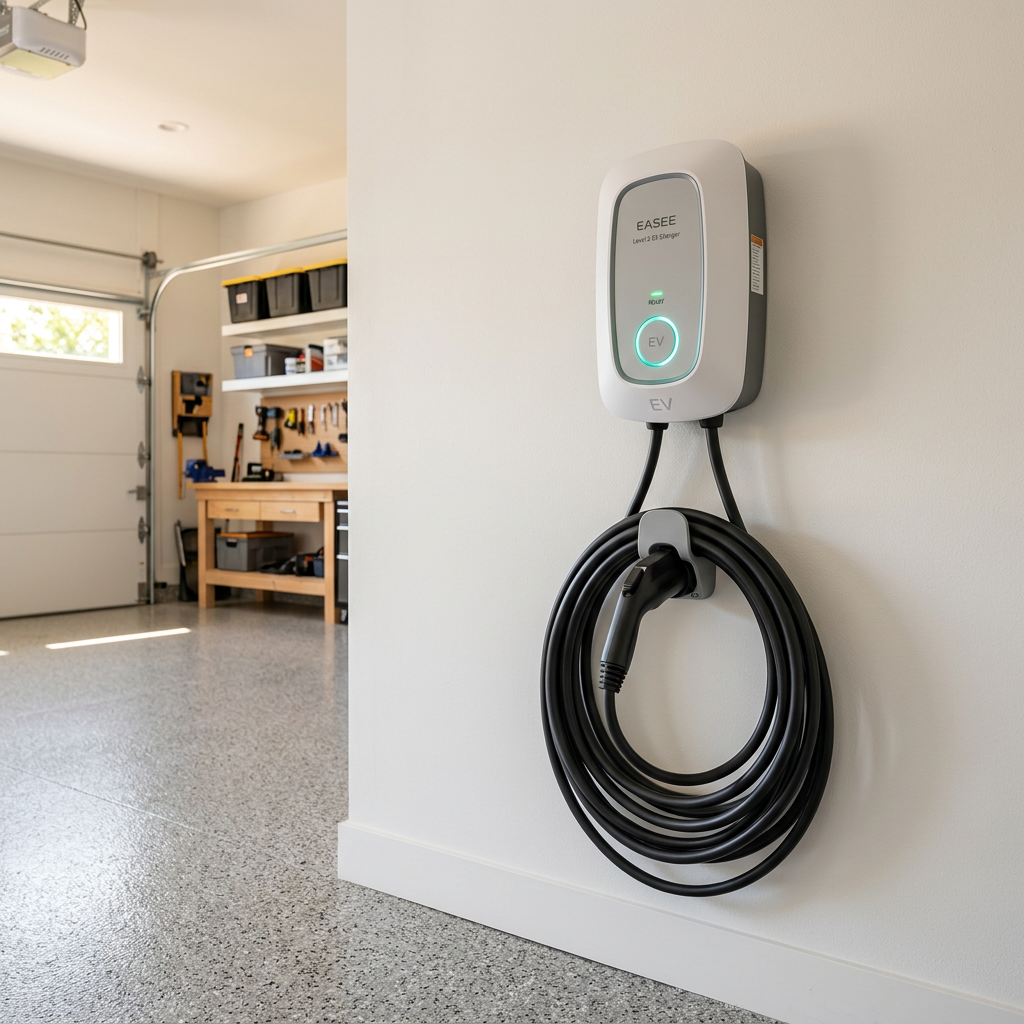
EV charger installation is quickly becoming one of the most important home upgrades for Winnipeg homeowners. Not long ago, a finished basement or double-car garage were the features that made a listing stand out. In 2026, a growing number of buyers walk into open houses and ask one simple question: Is there a charger in the garage? If you're buying, selling, or simply upgrading your home, here's everything you need to know.
Why EV Charger Installation Matters for Winnipeg Real Estate
Electric vehicle adoption in Canada is accelerating faster than most people anticipated. Manitoba's provincial and federal incentives are making EVs more accessible, and buyers in neighbourhoods like River Heights, Tuxedo, and Niverville are specifically requesting EV-ready homes. A dedicated Level 2 charger is no longer a novelty — it's a standard expectation for move-up buyers.
Charging Levels: What Actually Matters at Home
Level 1 (120V) uses a standard outlet and adds only 8–15 km of range overnight — inadequate for most drivers. Level 2 (240V) is the gold standard for EV charger installation at home, adding 40–80 km per hour on the same circuit as your dryer. Level 3 DC fast chargers are commercial-grade and not practical for residential use.
What EV Charger Installation Involves
A typical Winnipeg installation includes four steps: an electrical panel assessment, a panel upgrade if needed (100-amp panels are common in older homes), running a dedicated 240V circuit to the garage, and mounting the charger unit itself. Popular brands include ChargePoint, Flo, Grizzl-E, and Wallbox. Total installed cost ranges from $800 to $2,500 — and rebates can bring that number down significantly.
Available Rebates and Incentives
The federal iMHZEV Program offers up to $600 toward a qualifying Level 2 EV charger installation. Manitoba Hydro's Power Smart program may provide additional rebates for EV-ready electrical work — check hydro.mb.ca for current amounts. Some large Winnipeg employers also offer rebates as part of sustainability initiatives.
Advice for Sellers
In most cases, installing a Level 2 charger before listing is worth it. A $1,000–$1,500 investment can pay off significantly in buyer interest and negotiating strength. If you choose not to install one, have an electrician confirm in writing that your panel has a spare 40–50 amp circuit — being able to say EV-ready panel is a meaningful selling point. Either way, highlight the feature prominently in your listing, including the brand and amperage.
What Buyers Should Ask
When touring homes, add these to your checklist: Does the home have a Level 2 EV charger? What size is the electrical panel? How far is the garage from the panel? Is there an existing 240V outlet in the garage? For condos, ask about shared charging stations and the building's EV policy — this is especially important in older buildings in Wolseley or Elmwood that may have original 100-amp panels.
Choosing the Right Charger
Look for a 48-amp unit for maximum charge speed, a NEMA 3R or 4 weatherproof rating for Winnipeg winters, at least 7.5 metres of cable, and smart Wi-Fi features for off-peak scheduling. Most Level 2 chargers use a J1772 connector compatible with all EVs via a standard adapter.
EV charger installation is now a real estate decision. Whether you're upgrading your home, preparing to sell, or evaluating a property to buy, it's a feature worth understanding — and worth investing in. Reach out anytime to discuss how it affects your specific situation.
Navigating Winnipeg-Specific Electrical and Permitting Hurdles
When planning an EV charger installation, homeowners in older neighbourhoods like River Heights or St. James often face unique challenges regarding electrical capacity. Before purchasing hardware, contact a certified electrician to conduct a load calculation. Many older homes operate on 60-amp or 100-amp service, which may require a panel upgrade to accommodate a dedicated 50-amp circuit. Utilizing our homeowner tools can assist in assessing your current infrastructure and identifying potential bottlenecks before you commit to a major renovation project.
Permitting is a non-negotiable requirement within the City of Winnipeg. All electrical work related to EV supply equipment must be permitted and inspected by an authority having jurisdiction to ensure compliance with the Canadian Electrical Code. Unpermitted installations are a significant red flag during a home inspection when you are Buying a home in Winnipeg. A professional electrician will handle the permit application process, ensuring that the work is documented properly for future real estate transactions, which adds tangible value to your property.
Beyond the electrical panel, consider the logistics of conduit installation through Winnipeg’s extreme frost cycles. If your charger is located in a detached garage, the conduit must be buried at the appropriate depth or run securely to prevent shifting during our long winters. It is also wise to coordinate these electrical upgrades with any aesthetic improvements you might be planning. While your electrician is on-site, consider if other minor property updates are needed, as Choosing the Right Paint for Resale: A Home Refresh Guide offers excellent insights on balancing functional upgrades like EV infrastructure with cosmetic appeal. Combining these projects often reduces the time contractors spend on-site and minimizes the disruption to your daily routine, ensuring your home remains competitive in the local market.