

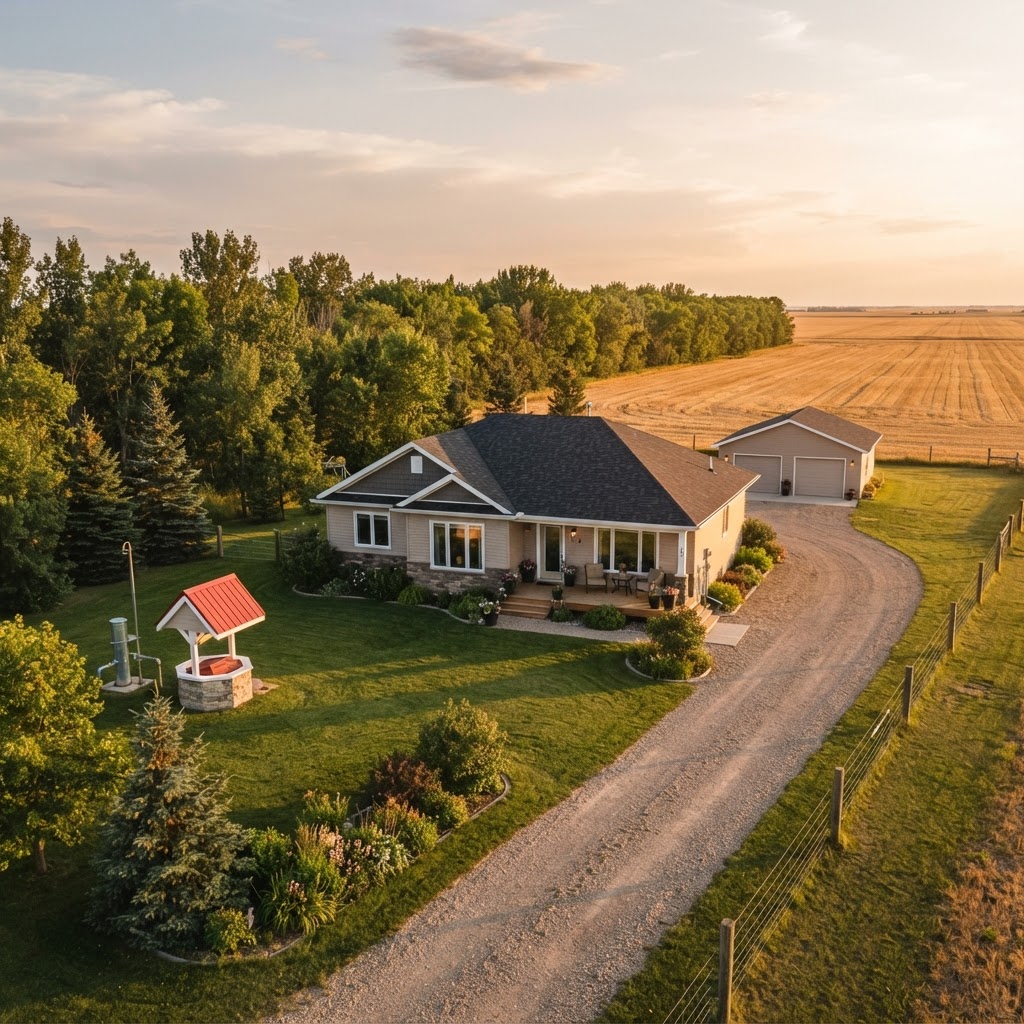
Manitoba well water is the biggest question mark on most acreage, rural, and farm listings. Where there is no municipal or co-op service, the well is the water supply, and it affects financing, insurance, inspections, negotiation, and long-term cost of ownership.
Well type matters, because one word covers systems built very differently: a deep drilled well drawing from bedrock behaves nothing like a sand point driven into shallow sand. This guide covers what you will see in Manitoba listings, what to check before you buy, and what to prepare before you sell.
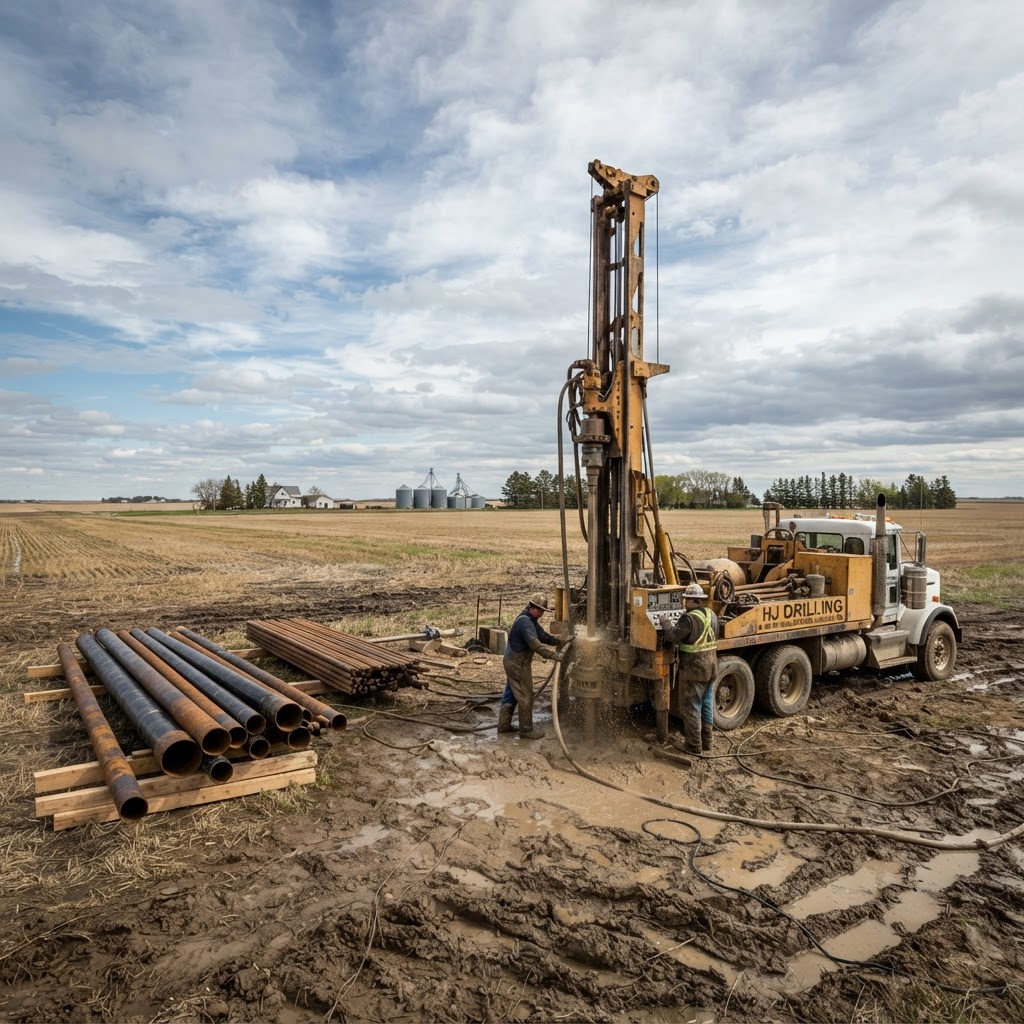
The main types of private wells in Manitoba listings
Manitoba groundwater comes from two main aquifer types, sand and gravel aquifers and bedrock aquifers, and well type usually follows the geology.
Drilled wells (deep wells)
A rig drills to a dependable aquifer and lines the hole with steel or plastic casing. Depth is often about 15 to 90 metres (50 and 300 feet), sometimes deeper where bedrock lies far below. A sealed cap closes the top, and the pump sits inside, pushing water out through a pitless adapter below the frost line.
Advantages: the best protection from surface contamination, more reliable yield, longer life, and room for treatment equipment. Drawbacks: the highest installation cost, and water that may need treatment for hardness, iron, sulphate, or salinity. In some areas, trace elements such as arsenic or uranium have been found in Manitoba well water above health guidelines. Check the well construction report, drilled and casing depth, casing and cap condition, pump age, and a yield test.
Bored or augered wells
An augered hole lined with concrete, tile, or steel, commonly under about 10 to 12 metres (35 to 40 feet). Cheaper than drilling and effective where the water table is high, but depth and yield are limited and surface water is a bigger risk. Check the casing, seal, and cap, and how the well behaved in the driest part of the year.
Dug wells
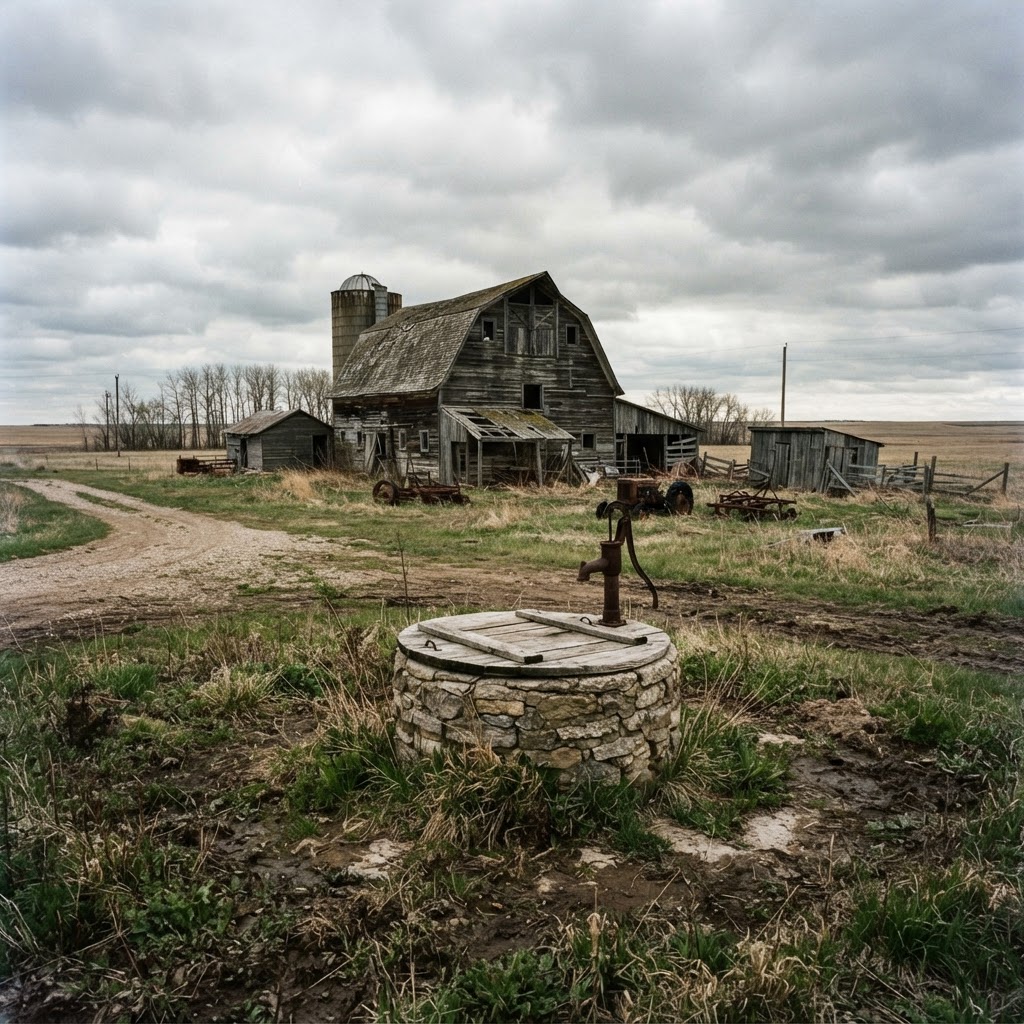
Hand-dug shafts lined with fieldstone, brick, concrete, or tile, rarely deeper than about 6 to 10 metres (20 to 33 feet), and the most contamination-prone type: shallow, wide open, and low in yield. Check whether the well is in use, its distance from the septic system and manure storage, and whether it should be sealed.
Sand point wells (driven point wells)
A pointed screen, the point, is driven into shallow sand or gravel on the end of a pipe, with the pump at the surface. Depth is often under about 8 metres (25 feet). Driving rather than drilling is quick and inexpensive, which is why sand point wells are common where soils are sandy and the water table is high, including river valleys.
The trade-offs matter more than the savings. Shallow groundwater leaves a sand point the most exposed source of Manitoba well water. Yield is often lower and swings with the season, dropping in dry spells and late winter. The screen can clog with sand, iron, or bacterial growth, and lifespan is typically shorter than a drilled well.
Check the yield in the driest season, the depth and age of the point, the pump, the surface seal, and a full water test. If the seller mentions hauling water in a dry summer, that tells you about capacity.
Shallow wells in general
Shallow well describes depth and groundwater source, not construction. Dug, bored, and sand point wells are commonly shallow, and a drilled well can be shallow if it stops at the first water-bearing layer.
Shallow wells draw from groundwater close to the surface, exposed to surface water, septic effluent, agricultural runoff, fuel storage, and road salt, and the level moves with the seasons. Quality can change, so testing frequency matters more, and yield can change: a well that passed a spring test may struggle by September. If a property relies on Manitoba well water from a shallow source, plan on annual testing and watch how it performs in late summer.
Other water sources in rural listings
Cisterns and hauled water
A storage tank filled by a delivery truck. It depends on a hauler and a tank in good condition, and deliveries are an ongoing cost. Ask about tank age, capacity, and the pump system, and why any well on the property is out of service. The province's testing subsidy covers cisterns too.
Dugouts
An excavated pond collecting snowmelt and runoff, typically used for livestock, irrigation, or fire protection rather than drinking water. Surface water is not a safe substitute for a tested well or treated supply, so check capacity, dry-year performance, and distance from manure storage.
Municipal or co-op water lines
A municipal or co-op line turns the well into a backup or irrigation source. Confirm the hook-up is active, the rates, and any capacity limits, and ask for a recent test of the Manitoba well water in case you rely on it.
How well type varies by region
Geology changes across the province and well type follows it, which is why Manitoba well water varies from property to property. Only a licensed professional assessing the site can say what is actually there.
Red River Valley and river lot areas
Shallow sandy soils and a high water table mean sand point and bored wells appear often, so annual testing matters.
The Interlake
Bedrock sits closer to the surface in many places, so drilled wells tapping bedrock aquifers are common, and mineral content is worth testing.
Southeast Manitoba and sandy areas
Sandy soils and shallow aquifers make sand point wells common. The province publishes maps of naturally occurring trace elements in Manitoba well water by area, worth checking for a property you are serious about.
Canadian Shield and northern areas
Thin soil over rock means drilled wells, sometimes with modest yield, and water that is often softer and more acidic.
Farm-specific considerations
A farm adds complexity a house does not have: higher water demand, more equipment on the land, and wells nobody has used in decades.
Livestock water needs and capacity. Manitoba well water demand on a farm is far higher than in a house: a well that supplies a household may not supply a herd, especially in winter. Match tested yield to peak demand.
Multiple wells on one property. Older farmsteads often have several, sometimes a shallow one for livestock and a drilled one for the house. Ask which serves which use and get records for each.
Irrigation and large-volume use. Large-volume uses such as irrigation may require a water rights licence, so do not assume a well can supply irrigation because it supplies a household.
Separation from contamination sources. Distance matters between a well and manure storage, fuel storage, septic fields, and drainage paths, and the province publishes guidance on reducing the risk of well water contamination.
Abandoned wells. Old farmsteads often have a well that was never sealed, which is both a safety hazard and a pathway for contamination into the aquifer, and well owners are responsible for sealing an unused well.
Buyer's due-diligence checklist for a property with a well
Work through this list before you remove conditions.
- Ask for the well records. Request the well construction report; if the seller does not have it, the province can search records from the land location.
- Test the water. Bacteria (total coliform and E. coli) plus nitrates, a concern for pregnant or nursing women and infants under one year old, and a general panel for minerals, hardness, iron, sulphate, and salinity, so you know what is in your Manitoba well water.
- Test capacity, not only quality. Ask for a flow rate and yield test: clear water that runs short in August is still a problem.
- Inspect the well and pump. Casing, cap, seal, pitless adapter, pressure tank, wiring, and pump age.
- Check separation distances. How far is the well from the septic field, manure storage, fuel storage, and surface drainage?
- Ask about abandoned wells. Confirm whether any exist and whether they were sealed.
- Make water testing and a well inspection conditions of your offer. It is your best protection, and your REALTOR® can draft the condition so the remedy is clear.
- Talk to your lender and insurer early. A shallow well, a cistern, or an older system may need extra documentation, so ask early.
Seller's checklist
A little preparation before listing usually pays for itself.
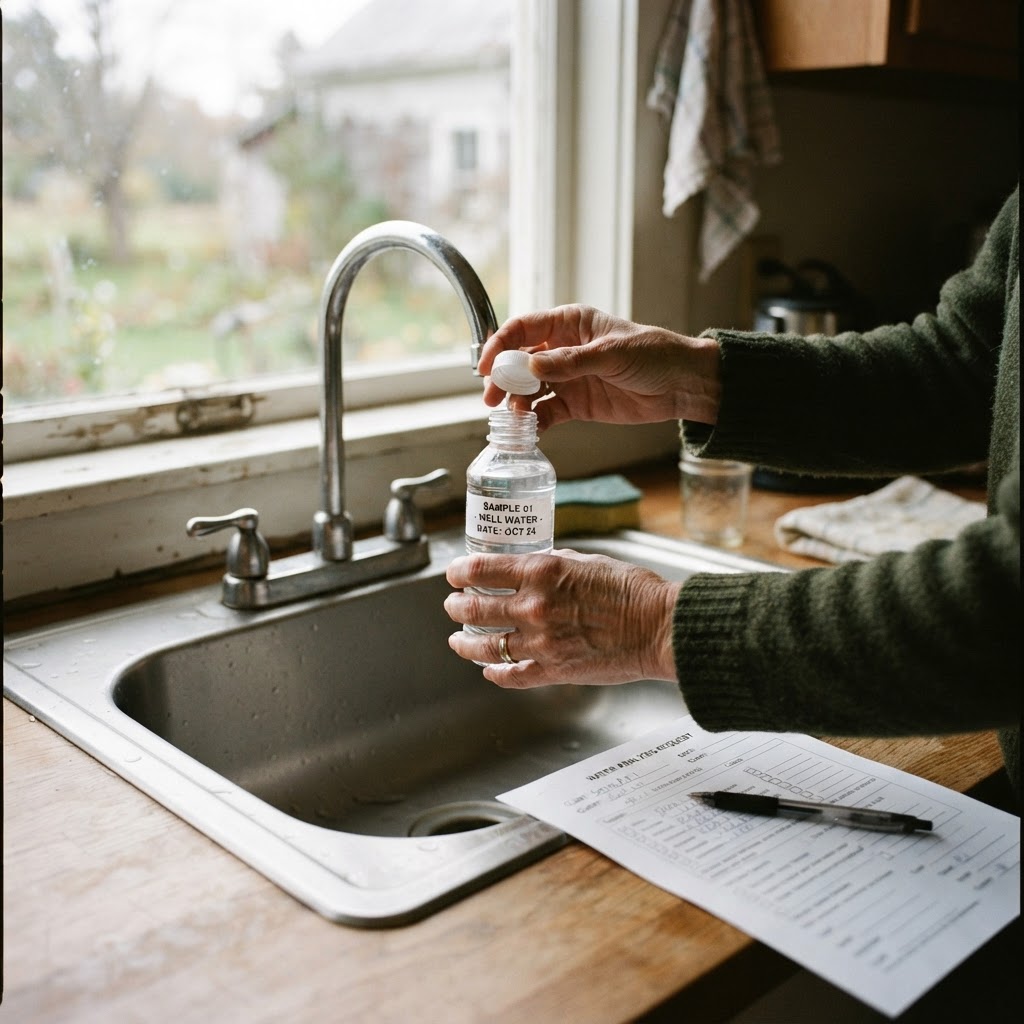
- Test before you list. A recent clean test result on your Manitoba well water is a selling feature; a surprise in the buyer's condition period is a negotiation.
- Gather your records. Well construction report, past test results, and pump or treatment service records.
- Complete the disclosure form accurately. Disclose the well type, its history, and any water quality or quantity issues you know about.
- Deal with a failed test or low yield before listing. Options range from disinfecting and retesting, to treatment for a specific issue, to well repairs, to drilling a new well if the old one cannot be saved.
- Decommission what you do not use. Have unused wells sealed by a licensed contractor, following the province's constructing and sealing guidance, and keep the paperwork.
- Consider a pre-listing well inspection. Knowing your own numbers lets you price and present confidently.
Frequently asked questions
What is a sand point well, and is it safe to drink from?
A pointed screen driven into shallow sand or gravel, usually under about 8 metres (25 feet). Safety depends on the water, not the construction method, so plan on annual testing and a realistic yield check.
How often should a private well be tested in Manitoba?
At least once a year is the practical standard, and more often for a shallow well or after flooding. Manitoba offers a once-a-year subsidy for bacterial testing of private wells and cisterns.
Does a shallow well affect mortgage approval?
It can change how the property is documented, since lenders and insurers ask about the water supply. A shallow well or cistern may need a current water test or yield report, so ask early.
What should I do if the water test fails during the condition period?
Some failures clear up after disinfecting and retesting; others point to a contamination source that must be identified. Then decide whether the fix becomes a condition, a price adjustment, or a walkaway.
Can I add a well to a rural lot, and who is allowed to drill it?
Only a licensed Manitoba well drilling contractor, or someone working for one, may construct a well. That contractor can say what is realistic for the site and whether a water rights licence is needed.
Next steps for buyers and sellers with a well
Buying or selling an acreage, rural home, or farm in Manitoba? Contact Mark Goldade, Personal Real Estate Corporation, at 431.306.2240. We can review the Manitoba well water details on a property you are considering, or help you prepare your documentation.
Browse acreage, rural, and farm listings, request a home valuation if you are preparing to sell, or start with the province's Private Well Information and the drinking water fact sheets.

Mark Goldade, Personal Real Estate Corporation
Royal LePage Prime Real Estate · 431.306.2240 · Published October 15, 2026
This article is general information, not legal, engineering, or health advice. Consult a licensed well driller, certified water testing lab, and your lawyer for your specific property.