

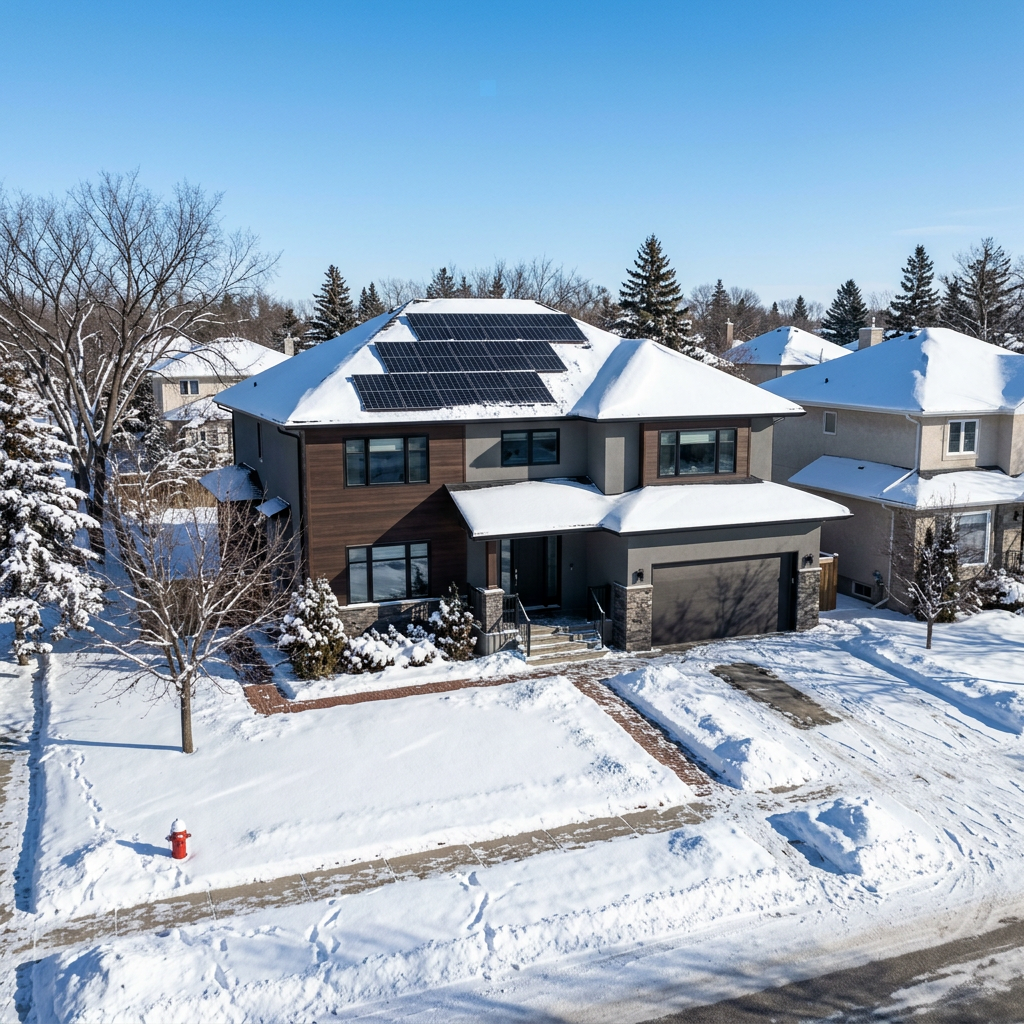
Solar Power Winnipeg Homes: What Every Homeowner Needs to Know
Solar power for Winnipeg homes is becoming an increasingly popular investment — and for good reason. Despite our brutal winters, Manitoba receives excellent solar irradiance, and the economics of residential solar have improved dramatically. Whether you're thinking about installing panels, evaluating a home that already has them, or just curious about the numbers, this guide covers everything a Winnipeg homeowner needs to know about solar power for Winnipeg homes: roof placement, panel sizing, MB Hydro net metering, rebates, cost recovery, resale impact, and critical roof maintenance considerations.
Does Solar Power Work in Winnipeg?
Many people assume cold, snowy climates are bad for solar — but solar panels generate electricity from sunlight, not heat. Cold temperatures can actually improve panel efficiency. Winnipeg receives approximately 2,400+ hours of sunshine per year, ranking it among the sunniest cities in Canada — ahead of Vancouver and comparable to Calgary.
The main seasonal challenge is snow coverage in winter. Modern installations use pitch angles that encourage snow to slide off, and even partially covered panels continue generating some power. Most homeowners find winter underperformance is offset by exceptional summer generation.
Roof Placement, Panel Sizing, and What You Need
Proper roof orientation and pitch are the biggest factors in system performance. South-facing roofs are ideal — southwest and southeast-facing roofs can still achieve 85–95% of a south-facing system's output. East or west-only roofs see meaningful reductions. North-facing panels are generally not viable in Winnipeg.
An angle of 30–45 degrees is optimal for our latitude — it maximizes annual solar capture and helps snow shed naturally. Flat roofs can work with tilt-mount brackets but add cost. Always assess shading from trees, chimneys, or nearby buildings; even partial shading on one panel can affect a connected string. Microinverter systems help mitigate this.
Roof condition is critical. Solar panels last 25–30 years. If your roof is nearing end of life, replace it before installing panels — removing and reinstalling a solar array for a later roof replacement costs $2,500–$6,000+ in additional labour.
For panel quantity, here's how the math works for a typical Winnipeg home:
- Average annual household usage: 8,000–12,000 kWh
- Typical panel output: 400–430 watts per panel
- Winnipeg average peak sun hours: ~4.2–4.5 hrs/day (annual average)
- Rule of thumb: A 10 kW system (~23–25 panels) covers most of an average home's annual needs
Most residential installations range from 6 kW to 14 kW (15–35 panels). A qualified installer will analyze 12 months of hydro bills to size accurately.
Initial Investment and Cost Recovery
| System Size | Installed Cost (est.) | Annual Savings (est.) | Payback Period |
|---|---|---|---|
| 6 kW (small home) | $18,000–$24,000 | $900–$1,200/yr | 15–22 years |
| 10 kW (average home) | $28,000–$38,000 | $1,400–$1,900/yr | 15–22 years |
| 14 kW (large home/EV) | $38,000–$52,000 | $1,800–$2,500/yr | 16–22 years |
Always get 2–3 quotes. Costs vary by roof complexity, panel brand, and inverter type.
Payback periods in Manitoba are longer than provinces with higher electricity rates because Manitoba Hydro rates are among the lowest in North America. That's both a blessing (cheap electricity) and a challenge (smaller dollar savings). The economics still work — especially factoring in rising hydro rates over time, federal incentives, and resale value lift.
Selling Power Back to MB Hydro: Net Metering
Manitoba Hydro's Net Metering program lets residential solar customers send excess power back to the grid and receive a credit on their bill at the same retail rate — currently approximately $0.095–$0.11 per kWh. Credits accumulate and apply against future bills. Unused credits at year-end are paid out at the wholesale rate (lower than retail), so size your system to offset annual consumption rather than massively overproduce.
Requirements: system connected to the MB Hydro grid, maximum 100 kW residential capacity, bi-directional meter (installed by Manitoba Hydro), and your installer must submit an interconnection application before energizing the system.
Rebates and Incentives Available in Manitoba
The Canada Greener Homes Grant (up to $5,000 for solar) closed to new applicants in 2024. However, the Canada Greener Homes Loan — an interest-free loan of up to $40,000 repaid over 10 years — remains available for eligible retrofits including solar. Additionally, a 30% federal Clean Technology Investment Tax Credit may apply to eligible solar and battery storage equipment — consult a tax professional for eligibility.
Manitoba has no dedicated provincial solar rebate program as of this writing, due to the province's already-low hydro rates. Check Manitoba Hydro's website and the Province of Manitoba's energy efficiency programs for current offerings, as this landscape evolves. The City of Winnipeg has also explored PACE (Property Assessed Clean Energy) financing — check with the city's sustainability office for active programs.
How Solar Affects Your Home's Resale Value
This is one of the most common questions I get from sellers and buyers in Winnipeg, and the honest answer is nuanced.
The upside for sellers: US studies consistently show solar homes sell for a 3–4% premium. In Winnipeg, buyers increasingly view solar as desirable — particularly those expecting hydro rates to rise or planning EV adoption. A system with documented production history and a transferable warranty is a genuine selling point. Solar homes tend to spend fewer days on market when priced appropriately.
The complications: Leased panels are a significant issue. If your system was financed through a lease or PPA, the panels may legally belong to the financing company. Buyers must assume the lease or it must be paid out at closing — this can stall or kill deals. Own your system outright if at all possible. Also, Winnipeg appraisers have limited comparable sales for solar homes, which can mean the value added isn't fully reflected in an appraisal. Have documentation ready: installer warranty, production records, roof inspection report.
If you're planning to sell within 3–5 years, carefully evaluate whether installation makes financial sense first. Talk to me before making the decision — I can help you understand how it will affect your specific home's marketability.
Roof Maintenance and Repair After Solar Installation
This is the area most homeowners underestimate. Any roofing work — shingle replacement, flashing repair, leak investigation — in the area under or near panels requires partial or full panel removal by a solar contractor (not your roofer). Budget for:
- Partial removal/reinstall: $800–$2,000
- Full system removal/reinstall: $2,500–$6,000+
Solar mounts require roof penetrations. A quality installer uses flashed, sealed mounts with a workmanship warranty covering penetrations (typically 10 years). Always verify this before signing a contract.
For ongoing maintenance: clean panels 1–2 times per year (spring and fall), inspect for debris or bird nesting under panels, and monitor production through your inverter app — a sudden output drop signals an issue to investigate. Professional inspection every 5 years is recommended.
If you're buying a home with solar panels already installed, always ask for: the roof age at time of installation, installer workmanship warranty, panel and inverter warranty (are they transferable?), historical production records, and documentation of any roof repairs since installation.
The Bottom Line
Solar power for Winnipeg homes is a viable, worthwhile long-term investment — particularly for homeowners planning to stay 15+ years and those anticipating EV adoption or rising hydro rates. The economics don't deliver the same rapid payback as higher-rate provinces, but net metering credits, federal incentives, long panel lifespans, and resale value make a compelling combined case.
The keys: assess your roof's remaining life before committing, own your system outright rather than leasing, right-size to your actual consumption, and work with a reputable local installer who handles the MB Hydro interconnection application. Have questions about a solar-equipped home you're considering, or wondering how panels might affect your listing price? Reach out anytime — I'm happy to help.