

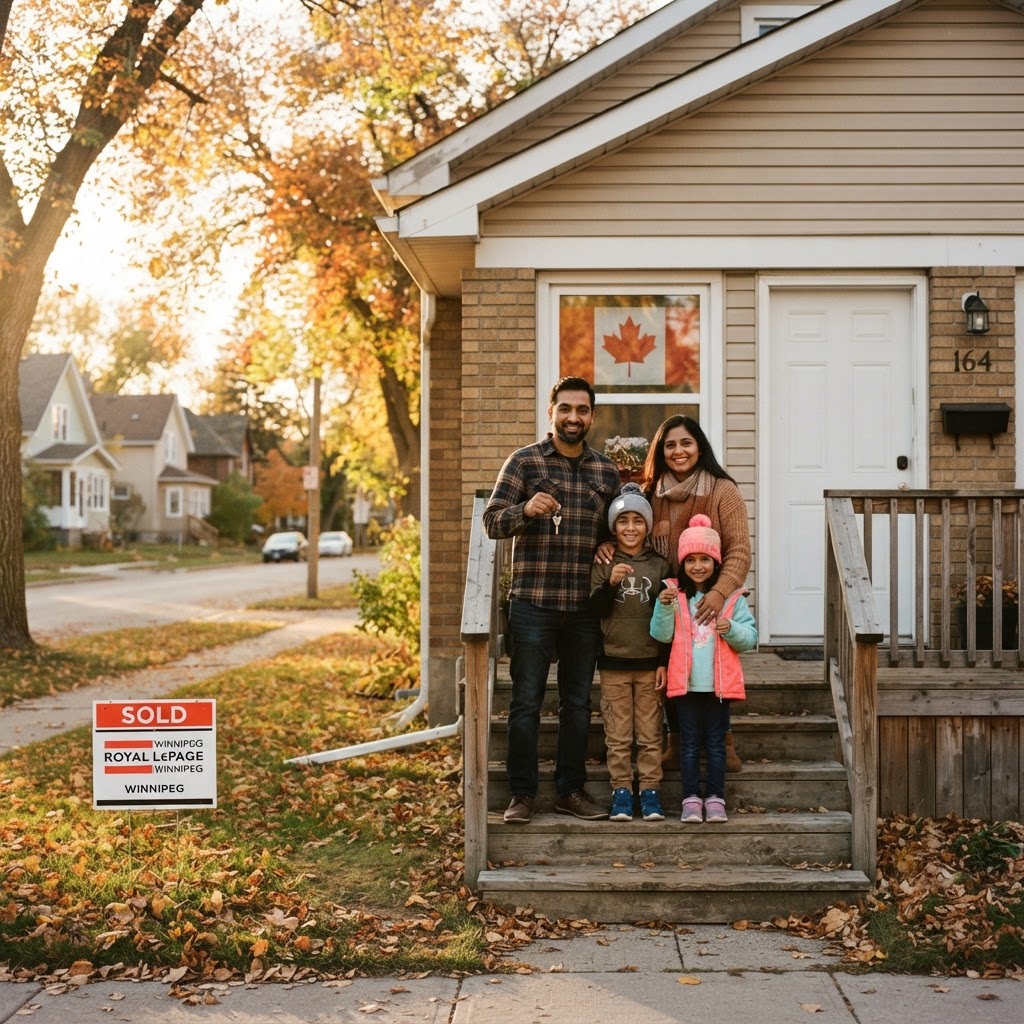
Buying a home in Canada as a newcomer is more than a financial milestone. It is the moment a new country begins to feel permanent. Nine in ten newcomers (90 per cent) say that home ownership is important to their sense of being established in Canada, according to the Royal LePage 2026 Canadian Newcomers Survey, conducted by Burson. Yet two thirds of newcomers (66 per cent) own no property at all.
That gap — between wanting a home and owning one, and between what newcomers expect of the Canadian market and what they actually encounter — is the real story in the survey data. It is also a story anyone buying a home in Canada as a newcomer will recognize, and one Winnipeg buyers know well.

The Belief Is There. The Ownership Isn't.
Four in five newcomers (80 per cent) believe that home ownership is a good financial investment, rising to 86 per cent among those who owned property before immigrating. But only one third (33 per cent) currently own their primary residence. Of the 66 per cent who own nothing, 80 per cent rent their home and 13 per cent live with family or friends.
Ownership climbs steadily with time in the country. Among newcomers who have lived in Canada at least five but fewer than ten years, 45 per cent own a home, compared to just 22 per cent of those who arrived less than five years ago. Statistics Canada has found that by their fifth year after admission, economic-class immigrants report home ownership rates comparable to Canadian-born individuals. The survey is not describing a group that has abandoned the idea of ownership. It is describing a group still on its way there.
“Home ownership has long been a defining goal for Canadians, and for newcomers it can carry added significance as they establish themselves in a new country and community,” said Phil Soper, president and CEO of Royal LePage. “They face many of the same affordability challenges as Canadian-born buyers, from saving for a down payment to finding a property that meets their needs and budget. At the same time, they are likely learning an entirely new housing and financial system.”
In Manitoba, Newcomers Stay Where They Land
Where a newcomer first settles turns out to be remarkably predictive of where they eventually buy. Nationally, 71 per cent of newcomers still live in the same city or town where they first settled. In Saskatchewan and Manitoba, that figure is the highest in the country at 84 per cent — newcomers here put down roots where they arrive and stay.
The purchasing pattern is even stronger. Among newcomer homeowners in Saskatchewan and Manitoba, 92 per cent bought their home in the community where they first landed, well above the national figure of 68 per cent. Nationally, 47 per cent of newcomers who plan to buy intend to do so in the same city or town where they first arrived.
That has a practical implication for anyone buying a home in Canada as a newcomer and settling in Winnipeg: the neighbourhood you rent in is very often the neighbourhood you will buy in. It is worth getting to know the market in the area you have already started calling home, and our Winnipeg buying guide and neighbourhood pages are a good place to start.
For context, Ontario was the most popular first destination nationally (47 per cent), followed by Quebec (16 per cent), British Columbia (13 per cent) and Alberta (12 per cent). Nearly half of newcomers (46 per cent) first settled in or near the downtown core of a major city, while another 35 per cent settled in a suburb.
The Barrier Is the Down Payment, Not the Monthly Payment
Among newcomers who do not own a home but intend to buy one, 76 per cent say they plan to purchase in Canada — nearly half of them within the next two years. The obstacles they name are financial and informational rather than a lack of interest:
- 61 per cent say saving for a down payment is the biggest barrier to buying a home in Canada as a newcomer
- 50 per cent cite securing more stable or higher-paying employment
- 28 per cent want to learn more about the homebuying process in Canada
- 27 per cent are focused on building their credit score or credit history
- 26 per cent are still deciding where they want to live
Most also arrived expecting a challenge. Before immigrating, nearly two in five newcomers (39 per cent) expected buying a home in Canada to be more difficult than in their home country, while 27 per cent expected it to be easier and 23 per cent expected something similar. Newcomers now living in Atlantic Canada (48 per cent), British Columbia (42 per cent) and Ontario (41 per cent) were the most likely to have expected it to be harder.
Credit history is frequently the piece that surprises people. “Some come from countries where cash is king, from everyday purchases to major transactions like homes, so they may arrive with strong finances and little or no debt, but also without the credit history Canadian lenders look for,” said Eunice Aranda, sales representative with Royal LePage Benchmark in Calgary.
There is help built for exactly this situation. The Canada Mortgage and Housing Corporation (CMHC) Newcomers program provides mortgage loan insurance for eligible permanent residents and non-permanent residents authorized to work in Canada. Where Canadian credit history is limited, CMHC may consider other ways of establishing creditworthiness, including an international credit report or a reference from a financial institution in the borrower's country of origin.
If that is the stage you are at, start with our guides to the mortgage process in Manitoba and first-time home buyer programs in Manitoba.
Rent-to-Own: A Genuine Path, Not a Gimmick
For newcomers who are still building Canadian credit or saving toward a down payment, qualifying for a traditional mortgage can simply take longer. Rent-to-own programs offer a different route: you live in the home while working toward buying it. One fifth (20 per cent) of newcomer homeowners say they purchased their first primary residence in Canada through a rent-to-own program, and more than half of newcomers overall (52 per cent) are familiar with the option.
“In many cases, it is not about whether they can manage the monthly cost of owning a home, but whether they need more time to qualify for a mortgage,” said Amy Ding, founder and CEO of Requity Homes, a rent-to-own provider and partner of Royal LePage and CMHC. “Rent-to-own can help bridge that gap, giving newcomers time to establish themselves financially in Canada while living in the home they intend to buy and building toward their down payment.”
Who Newcomers Actually Turn To
When asked where they found information about buying a home in Canada, more than half of newcomer homeowners (55 per cent) named a real estate agent — ahead of family or friends (42 per cent), online research (37 per cent) and banks, mortgage brokers or financial advisors (35 per cent). Among newcomers who own their primary residence, nearly three quarters (73 per cent) worked with an agent to buy it. That is the most-cited source in the survey by a wide margin, and the professional newcomer buyers most often rely on.
Winnipeg's own newcomers echo that experience. “Buying a home works very differently here than it does in many of my clients' home countries, and navigating an unfamiliar system can add another layer of stress,” said Anna Denisiuk, sales representative with Royal LePage Prime Real Estate in Winnipeg. “Taking the time to explain the process and connect buyers with the right professionals can make a real difference, especially when they have not yet had the opportunity to build those relationships in Canada. Above all, trust has to be earned. For many newcomers, this purchase represents years of hard work and savings.”
What This Means If You Are Buying in Winnipeg
Five practical takeaways from the survey data:
- Start with your credit, not the listings. A year of deliberate Canadian credit building can meaningfully change what you qualify to borrow.
- Get pre-approved early. Pre-approval tells you what you can actually afford and surfaces documentation questions while there is still time to solve them.
- Budget beyond the down payment. Closing costs in Manitoba include land transfer tax, legal fees, title insurance and adjustments. Our closing costs guide walks through all of them.
- Look closely at the neighbourhood you already know. If Manitoba's 84 per cent retention figure is any guide, the area you settle in is likely the area you will buy in.
- Run the numbers yourself. Our free calculators cover affordability, mortgage payments, CMHC insurance and Manitoba land transfer tax.
Frequently Asked Questions
Can newcomers to Canada get a mortgage?
Yes. Permanent residents, and non-permanent residents authorized to work in Canada, can qualify for mortgage financing. Lenders typically look for Canadian income, employment history and credit, which is why recent arrivals sometimes need more time or alternative documentation. CMHC's Newcomers program insures mortgages for eligible newcomers and, where Canadian credit history is limited, may accept an international credit report or a reference from a financial institution in your country of origin.
How much do I need for a down payment in Manitoba?
For an insured mortgage, minimums start at 5 per cent of the portion of the purchase price up to $500,000, with a larger percentage required above that threshold. But the minimum is not the goal: a larger down payment lowers your monthly carrying costs and can strengthen your approval. Verify current rules with your lender or mortgage broker, because minimum down payments, the insured price ceiling and amortization options have all changed recently.
Where do newcomers buy homes in Winnipeg?
The survey found newcomers overwhelmingly buy in the community where they first settled — 92 per cent of newcomer homeowners in Saskatchewan and Manitoba purchased in the community where they first arrived. In Winnipeg, that often means the neighbourhood you rented in first, with the cultural communities, transit, schools and services you already know. Explore the community and neighbourhood guides on this site for a closer look at each area.
Thinking About Your First Home in Canada?
I work with newcomers across Winnipeg and the surrounding communities, and I know the first purchase in a new country is about far more than square footage. I will walk you through financing, offers, inspections and closing costs in plain language, connect you with the right professionals, and tell you honestly what your budget will and will not buy in the neighbourhood you want.
If you are still renting and planning ahead, that conversation is worth having now. Understanding your borrowing position a year early is the single most useful thing a future buyer can do.
Mark Goldade, CD — REALTOR®
Mark Goldade Personal Real Estate Corporation · Royal LePage Prime Real Estate
1877 Henderson Highway, Winnipeg, Manitoba R2G 1P4
Cell 431-306-2240 · Office 204-989-7900 · mark@goldaderealtor.com
Survey figures in this article are drawn from the Royal LePage 2026 Canadian Newcomers Survey, conducted by Burson. This article is general information, not financial, legal or immigration advice. Financing rules, lending criteria and government programs change — verify current requirements with your lender or mortgage broker, your lawyer, and the relevant government programs.