

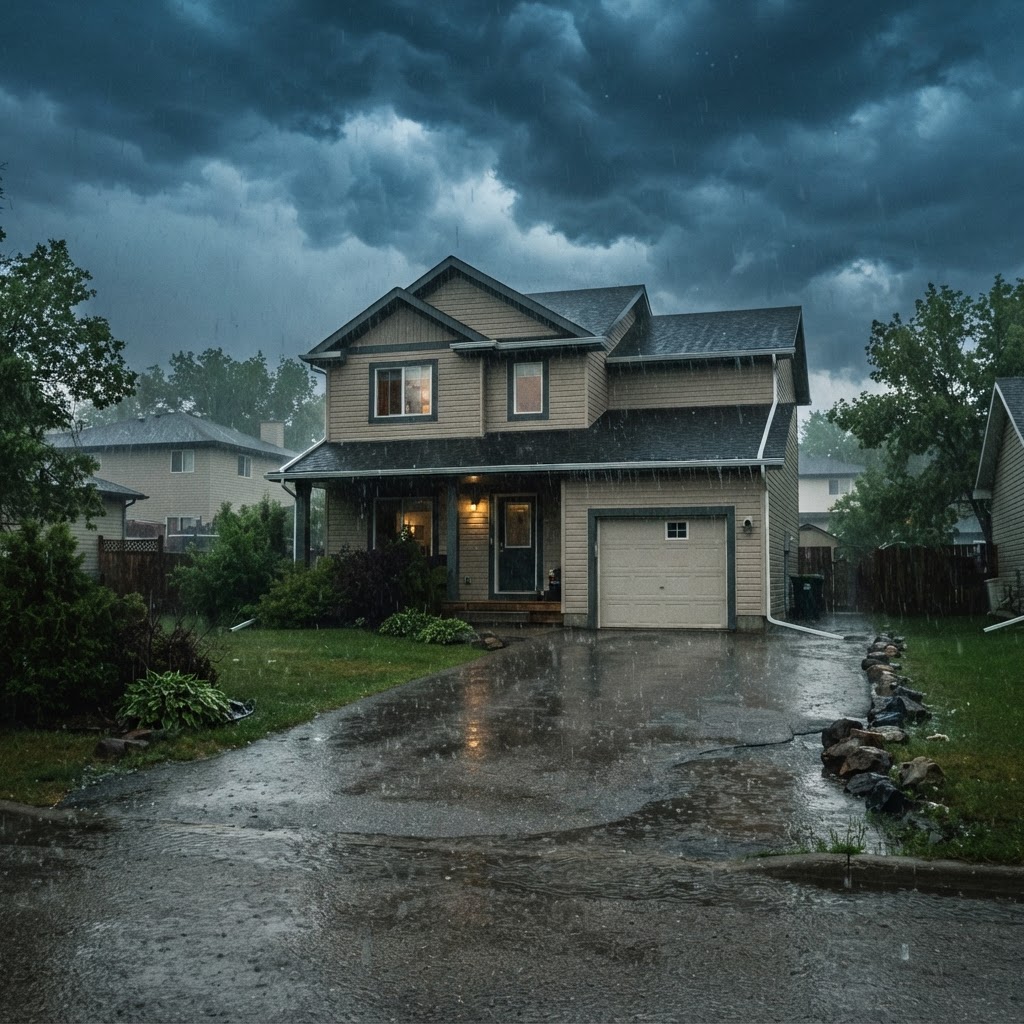
Manitoba Storm Damage Preparation: June 2026 Lessons
On June 9, 2026, a massive rain and hail storm swept across southern Manitoba and rewrote what many homeowners thought they knew about their properties. Winnipeg saw an average of 122 mm of rain in a single event. Stonewall, just north of the city, was hit even harder — an average of 255 mm. Hail pummelled roofs, siding, and vehicles. Basements flooded. And here is the part that should make every homeowner pause: many of the properties that suffered water damage had never seen water damage before.
If your home made it through this storm dry, do not assume the next one will be the same. The June 9 event proved that a property's flood history is no longer a reliable guide to its future. This guide walks through what happened, why "never-flooded" homes failed, and the practical steps every Manitoba homeowner should take before the next downpour.
What Happened on June 9, 2026
The storm was not a single cloudburst — it was a slow-moving system that parked over the Red River Valley and dumped extraordinary rainfall over several hours, accompanied by large hail in many areas. The totals tell the story:
| Location | Average Rainfall (June 9, 2026) |
|---|---|
| Winnipeg | 122 mm |
| Stonewall | 255 mm |
For context, Winnipeg's normal rainfall for the entire month of June is roughly 90 mm. Stonewall received nearly three months' worth of rain in a single day. City storm sewers, designed for a certain capacity, were overwhelmed. Sump pumps ran continuously — and many failed or lost power. Water found its way in through foundation cracks, window wells, backed-up floor drains, and weeping tile systems that simply could not move water fast enough.
The hail added a second layer of damage: dented siding, pockmarked shingles, shredded garden vegetation, and destroyed air conditioner fins. For homeowners in Stonewall, St. Andrews, and the northern corridor, the cleanup is still ongoing.
Why "Never-Flooded" Homes Failed
This is the most important takeaway from June 9. Several homeowners I spoke with said the same thing: "We've lived here 15 years and never had a drop of water in the basement." So why did it happen now?
A few reasons:
- The storm exceeded design capacity. Most residential drainage systems — weeping tile, sump pits, and city storm sewers — are engineered for a statistically probable maximum event. June 9 exceeded that probability. When the system's capacity is surpassed, water backs up and finds any path of least resistance into your home.
- Ground saturation. Earlier rainfall in the week meant the ground was already saturated. Water that would normally absorb into the soil instead ran off toward foundations.
- Sump pump failure and power outages. Many sump pumps ran for hours and overheated, or the power went out and battery backups were absent or dead. A sump pump that works perfectly in a normal storm is useless in a 255 mm event if it fails or loses power.
- Aging infrastructure. Older weeping tile (the perforated pipe around your foundation) can crack, collapse, or become clogged with silt over decades. A home that drained well in 2010 may not drain well in 2026.
- Grading that has shifted. Soil settles over time. A yard that sloped away from the foundation 20 years ago may now slope toward it, funnelling water to the base of your walls.
The hard truth: a clean flood history does not guarantee a dry future. Every home has a threshold, and June 9 found it for many properties that had never been tested.
Protect Your Home: A Practical Checklist
Here is what I recommend every homeowner do — ideally before the next storm, but certainly before next spring. Think of this as your Manitoba storm damage preparation checklist. Most of these steps are inexpensive; a few require a contractor.
1. Check Your Grading and Downspouts
This is the single most cost-effective step. Walk around your home after the next moderate rain and watch where the water goes. The ground should slope away from your foundation for at least the first 1.5–2 metres. Downspouts should discharge at least 1.5 metres from the foundation — ideally to a splash pad, a rain barrel (with overflow directed away), or an extension. If your downspouts empty directly beside the foundation, you are inviting water in.
2. Test and Upgrade Your Sump Pump
Your sump pump is your last line of defence. If you do not know when it was last serviced, have it inspected. Consider:
- A battery backup sump pump — essential for power outages, which often accompany severe storms.
- A secondary backup pump on a separate circuit or water-powered, so a single pump failure does not mean a flooded basement.
- An alarm that alerts you when water rises above the normal pump trigger level.
Pumps typically last 7–10 years. If yours is older, replace it proactively — not after it fails.
3. Install or Maintain a Backwater Valve
A backwater valve on your main sewer line prevents city sewage from backing up into your basement drains when the municipal system is overwhelmed. Many Winnipeg homes have these now due to the City's Basement Flood Protection subsidy program. If you do not have one, look into it — the City of Winnipeg offers a subsidy program that can cover a significant portion of the cost. If you already have one, have it inspected annually — a seized valve is useless.
4. Inspect Weeping Tile and Foundation Cracks
If your home is older and you have never had the weeping tile inspected, consider a camera inspection — especially if you are buying a home. Foundation cracks should be sealed with hydraulic cement or epoxy injection. Hairline cracks are normal; widening or actively leaking cracks need professional attention.
5. Window Wells and Covers
Basement window wells are a common entry point for water. Ensure wells are clear of debris, have a proper gravel base for drainage, and are fitted with covers. A storm like June 9 can fill an unprotected window well in minutes and push water through the window frame.
6. Eavestroughs and Gutter Maintenance
Clean your eavestroughs at least twice a year — spring and fall. Clogged gutters overflow directly beside the foundation, defeating the purpose of your downspouts. Check that gutters are securely fastened and sloped correctly toward downspouts. Hail storms can dent and crack aluminum gutters; inspect after any major storm.
7. Roof and Siding Inspection (Post-Hail)
Hail damage to asphalt shingles is not always obvious from the ground. After June 9, have a roofer inspect for bruised or cracked shingles, exposed fibreglass mat, and damaged vent flashing. Insurance companies often require an inspection within a specific window to file a hail claim — do not delay. Siding, especially vinyl and aluminum, should be checked for cracks and dents. Document everything with photos.
8. Review Your Insurance Coverage
This is the step most people skip and regret. Call your insurance provider and confirm what your policy covers — specifically:
- Overland flooding (water entering from outside through windows, doors, or foundation) — this is often an add-on, not standard.
- Sewer backup — also frequently a separate endorsement.
- Sump pump failure — confirm coverage and limits.
- Hail damage — usually covered, but check your deductible.
Many homeowners discovered after June 9 that their policy did not include overland water coverage. Know this before the next storm, not after.
What to Do During a Major Storm
When a storm like June 9 is forecast:
- Move valuables, electronics, and important documents off the basement floor and onto shelves.
- Ensure your sump pump is running and the discharge line is clear and not frozen or blocked.
- Check that floor drains are clear.
- Keep a wet/dry shop vacuum, towels, and a squeegee accessible.
- If you have a backwater valve, confirm it is free to move.
- Park vehicles in a garage or under cover if hail is forecast.
- Charge phones and keep a flashlight and battery pack ready in case of power loss.
If Your Home Did Flood: Next Steps
If you experienced water damage on June 9 or in any future storm:
- Document everything with photos and video before you start cleaning up.
- Contact your insurance provider immediately and open a claim — there are often deadlines.
- Mitigate further damage — remove wet materials, run dehumidifiers, and ventilate. Insurance policies require you to limit additional damage.
- Beware of storm-chaser contractors. After major storms, out-of-province roofing and restoration companies flood affected neighbourhoods. Use licensed, insured, local contractors with verifiable references. If a deal feels too good or too pushy, it probably is.
- Get a professional moisture assessment before rebuilding — hidden moisture in wall cavities leads to mould.
What This Means for Buyers and Sellers
If you are buying a home in Manitoba, the June 9 storm changes what you should ask about. During a home inspection, specifically request:
- The age and condition of the sump pump and whether a backup is installed.
- The presence and condition of a backwater valve.
- Whether the home has a weeping tile system and when it was last inspected.
- The grading around the foundation — does it slope away?
- Any history of water entry, and whether the seller has made an insurance claim for water damage.
If you are selling, expect buyers to ask these questions now — and answer them honestly. Homes with documented flood-proofing upgrades (backwater valve, battery backup sump, graded lot) will stand out in a market that is suddenly very aware of water risk. If your home did take water on June 9, disclose it; concealing it creates legal liability and most buyers will be inspecting for signs of repair anyway.
The Bottom Line
The June 9, 2026 storm was a wake-up call. It showed that no home is automatically safe — not even the ones that have been dry for decades. Winnipeg's 122 mm and Stonewall's 255 mm were not a once-in-a-century fluke; climate modelling tells us to expect more frequent, more intense rainfall events in Manitoba in the years ahead.
The good news is that most protective measures are affordable and well within a weekend's work for many homeowners: clean your gutters, extend your downspouts, check your grading, service your sump pump, and review your insurance. The bigger items — backwater valves, weeping tile inspection, foundation repair — are investments that protect both your property and its resale value.
If you have questions about how storm readiness affects your home's value, or you are thinking about buying or selling in the Winnipeg area, I am happy to walk through it with you. Reach out anytime — call or text me at (431) 306-2240, or email mark@goldaderealtor.com.
Stay safe, and stay dry.
— Mark Goldade, Mark Goldade Personal Real Estate Corporation