

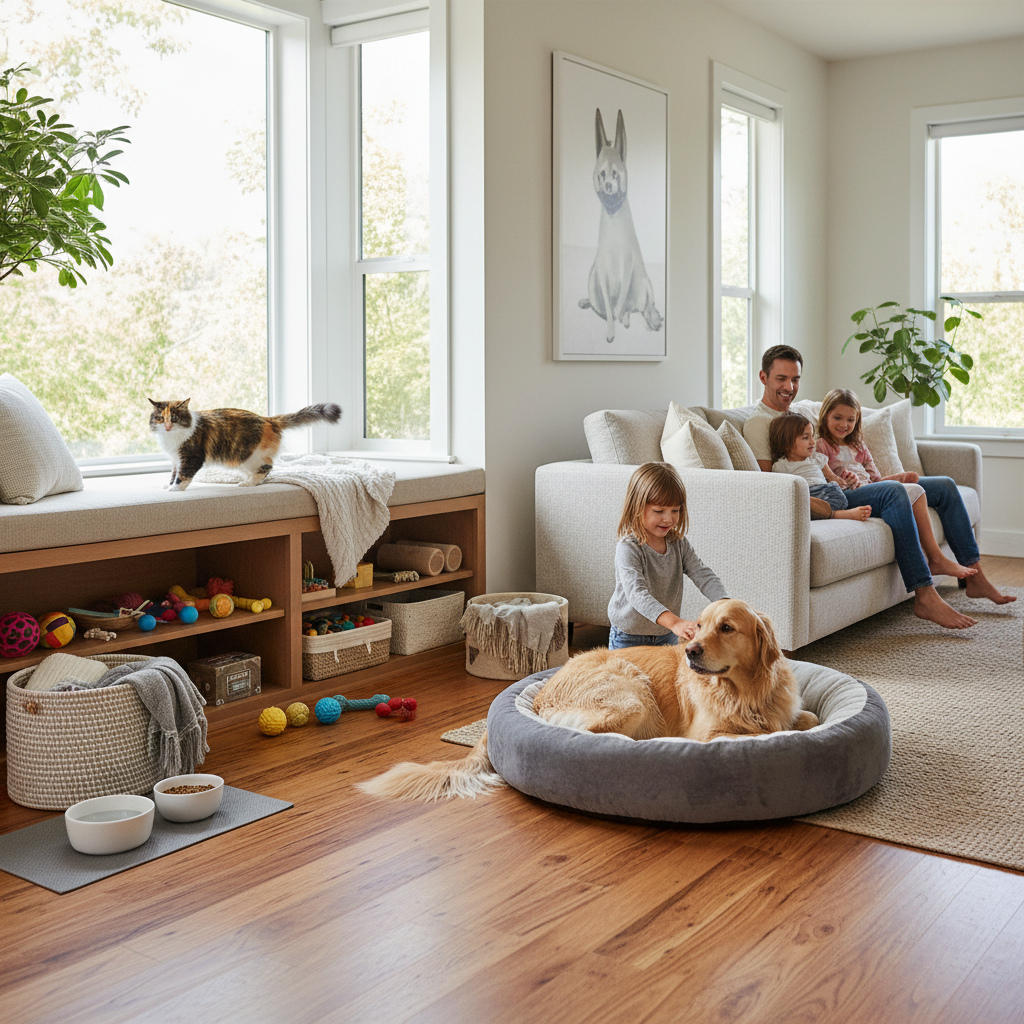
The Importance of a Pet-Friendly Home
For many of us, pets are cherished members of the family. Ensuring your home is pet-friendly can enhance their well-being and happiness while also maintaining a comfortable and safe living space for everyone. Whether you're welcoming a new pet or updating your current home, here are some tips to make your home more pet-friendly.
1. Create a Safe Environment
Pet-Proof Your Home
Just like childproofing, pet-proofing your home is essential:
- Secure loose wires and cords to prevent chewing
- Keep hazardous materials (cleaning products, medications, toxic plants) out of reach
- Ensure small objects that could be swallowed are put away
- Use trash cans with secure lids
- Store food safely away from curious pets
Safe Spaces
Provide safe spaces where your pets can retreat and relax:
- A cozy corner with their bed
- A crate (for dogs who are crate-trained)
- A dedicated pet room
- Window perches for cats
Having a designated safe area helps pets feel secure, especially during stressful times like thunderstorms or fireworks.
Secure Outdoor Areas
If you have a yard, ensure it's secure and safe for your pets:
- Install sturdy fencing with no gaps
- Check for toxic plants and remove them
- Provide shaded areas for hot days
- Ensure gates close securely
- Remove hazards like sharp objects or chemicals
2. Choose Pet-Friendly Materials
Flooring
Select durable, easy-to-clean flooring:
- Tile or Vinyl: Water-resistant and easy to clean
- Laminate: Scratch-resistant and affordable
- Sealed Hardwood: Attractive but requires maintenance
- Avoid light-colored carpets that show stains easily
Furniture
Choose pet-friendly fabrics and furniture:
- Leather or Microfiber: Easy to wipe clean and resistant to pet hair
- Slipcovers: Removable and washable
- Darker Colors or Patterns: Hide pet hair and minor stains better
- Consider furniture protectors or throws
Paint and Finishes
Use washable, durable paint finishes:
- Semi-gloss or satin finishes are easier to clean than flat paint
- Choose non-toxic paints safe for pets
- Consider darker wall colors in high-traffic pet areas
3. Designate Pet Zones
Feeding Area
Create a designated feeding zone:
- Use a mat under food and water bowls to catch spills
- Choose a quiet area away from high traffic
- Store pet food in sealed containers nearby
- Keep the area clean and organized
Sleeping Area
Provide comfortable sleeping arrangements:
- Place beds in quiet, draft-free locations
- Wash bedding regularly
- Provide multiple resting spots throughout the home
Play Area
Designate space for toys and play:
- Use bins or baskets for toy storage
- Create vertical spaces for cats (cat trees, shelves)
- Ensure the area is safe for active play
4. Manage Pet Hair and Odors
Air Quality
- Use HEPA air purifiers to reduce pet dander
- Change HVAC filters regularly
- Ventilate your home regularly
- Use pet-safe air fresheners sparingly
Cleaning Routine
- Vacuum frequently with a pet-specific vacuum
- Groom pets regularly to reduce shedding
- Clean litter boxes daily
- Wash pet bedding weekly
- Use enzymatic cleaners for accidents
5. Add Pet-Friendly Features
Built-In Feeding Stations
Consider built-in feeding areas that keep bowls contained and off the floor.
Pet Doors
Install pet doors for easy outdoor access (ensure your yard is secure).
Pet Showers or Wash Stations
A mudroom or garage wash station makes bathing pets easier.
Window Seats
Cats especially love window perches for bird-watching.
Indoor Pet Gates
Use gates to keep pets out of certain areas or to create safe zones.
6. Safety Considerations
Toxic Plants to Avoid
Many common houseplants are toxic to pets:
- Lilies (extremely toxic to cats)
- Sago palms
- Azaleas
- Tulips
- Daffodils
Research pet-safe alternatives like spider plants, Boston ferns, or African violets.
Secure Cabinets and Drawers
Use childproof locks on cabinets containing hazardous materials.
Window Safety
Install secure screens to prevent falls, especially for cats in high-rise buildings.
7. Consider Your Pet's Needs
Exercise and Stimulation
- Provide adequate space for exercise
- Offer interactive toys and puzzles
- Create enrichment opportunities
- Ensure daily outdoor time (for dogs)
Comfort
- Maintain comfortable temperatures
- Provide multiple water sources
- Create quiet spaces away from noise
- Consider your pet's age and mobility (ramps for older pets)
Conclusion
Making your home pet-friendly doesn't mean sacrificing style or comfort. With thoughtful planning and the right materials, you can create a space that's beautiful, functional, and perfect for both humans and pets. By implementing these tips, you'll ensure your furry family members are safe, happy, and comfortable while keeping your home clean and organized. Remember, a pet-friendly home is a happy home for everyone!