

HRV System Winnipeg: What Every Homeowner Needs to Know
If you own a home in Winnipeg — or you're thinking about buying one — you've likely come across the term HRV system. An HRV system in Winnipeg isn't just a nice-to-have; in Manitoba's extreme climate, it's one of the most important mechanical systems in your home. This guide explains exactly what it is, why it matters, what it costs, and the honest pros and cons.
What Is an HRV System?
HRV stands for Heat Recovery Ventilator. It's a mechanical ventilation system that exchanges stale indoor air with fresh outdoor air — while recovering the heat from the outgoing air so it doesn't go to waste.
Modern homes are built extremely airtight for energy efficiency. That's great for your heating bill, but it traps pollutants, moisture, CO₂, and odours inside. Without proper ventilation, air quality in a sealed home deteriorates fast — especially in winter when windows stay shut for months. An HRV system solves this by continuously cycling fresh air in and stale air out, using a heat exchanger core to transfer up to 75–85% of the heat from the outgoing air to the incoming fresh air.
How Does an HRV System Work?
- Stale, warm air is drawn from bathrooms, the kitchen, and laundry areas.
- That air passes through the heat exchanger core inside the HRV unit.
- Simultaneously, fresh cold air is pulled in from outside and passes through the same core on a separate path.
- Heat transfers from the outgoing air to the incoming air — without the two airstreams mixing.
- Fresh, pre-warmed air is distributed throughout the home. Stale air is expelled outside.
Most HRV units connect to your existing ductwork or use their own dedicated duct system.
Why HRV Systems Are Essential in Winnipeg
Winnipeg's climate is one of the most extreme in North America. We regularly see temperatures of -30°C and colder from November through March. During those months, homes are sealed tight for weeks on end. An HRV system in Winnipeg addresses the resulting buildup of humidity, CO₂, VOCs, and mould risk that airtight construction creates.
Manitoba Building Code now requires HRV systems in most new residential construction. If you're buying a home built after approximately 2010, it almost certainly has one. Older homes may not — and that's worth knowing before you buy. When I'm helping buyer clients, I always flag whether an HRV is present and operational.
HRV System Pros and Cons
✅ Benefits
Improved Indoor Air Quality: Continuous fresh air exchange reduces CO₂, allergens, dust, pet dander, cooking odours, and chemical off-gassing — especially valuable for families with asthma, allergies, or young children.
Moisture Control: HRV systems help manage humidity year-round. In winter, they exhaust excess moisture — reducing condensation on windows and the risk of mould in wall cavities. Excessive indoor humidity in a Winnipeg winter is one of the leading causes of structural moisture damage.
Energy Efficiency: A quality unit can recover 75–85% of heat from outgoing air, meaning you're bringing in fresh air at a fraction of the heating cost of simply opening a window.
Comfort: Fresh air makes a home feel better. Many homeowners report improved sleep quality, fewer headaches, and reduced stuffiness after installing an HRV system.
⚠️ Drawbacks
Upfront Cost: A quality HRV system plus professional installation runs $1,500–$3,500 depending on the brand and complexity of the ductwork.
Maintenance Requirements: HRV systems require regular maintenance. Filters need cleaning every 3–6 months, and the core should be inspected annually. A neglected HRV can actually become a source of poor air quality.
Noise: Some units produce a low hum, which can be noticeable in quiet areas of the home. Premium units are quieter, but cheaper models can be disruptive depending on placement.
Defrost Cycle in Extreme Cold: At very low temperatures (below -25°C), the core can frost over and the unit will enter a defrost cycle, temporarily reducing ventilation. Highly relevant for Winnipeg winters.
HRV vs. ERV: Which Do You Need?
HRV transfers heat only — moisture is exhausted with the stale air. Best for Winnipeg's cold winters where you want to remove excess indoor moisture.
ERV (Energy Recovery Ventilator) transfers both heat and moisture. Better suited for hot, humid climates.
For an HRV system in Winnipeg and most of Manitoba, HRV is the right choice for the vast majority of homes.
HRV System Cost in Winnipeg
| Item | Estimated Cost |
|---|---|
| Entry-level unit (Fantech, Lifebreath) | $600–$900 |
| Mid-range unit (Venmar, Daikin) | $900–$1,500 |
| Premium unit (Zehnder, Broan) | $1,500–$2,500+ |
| Professional installation | $500–$1,500 |
| Annual maintenance | $100–$250/year |
| Operating cost (electricity) | ~$50–$120/year |
Total first-year cost typically ranges from $1,500 to $3,500. Ongoing costs are modest — primarily filter replacements and annual servicing.
Does Your Home Have an HRV System? How to Check
Look for:
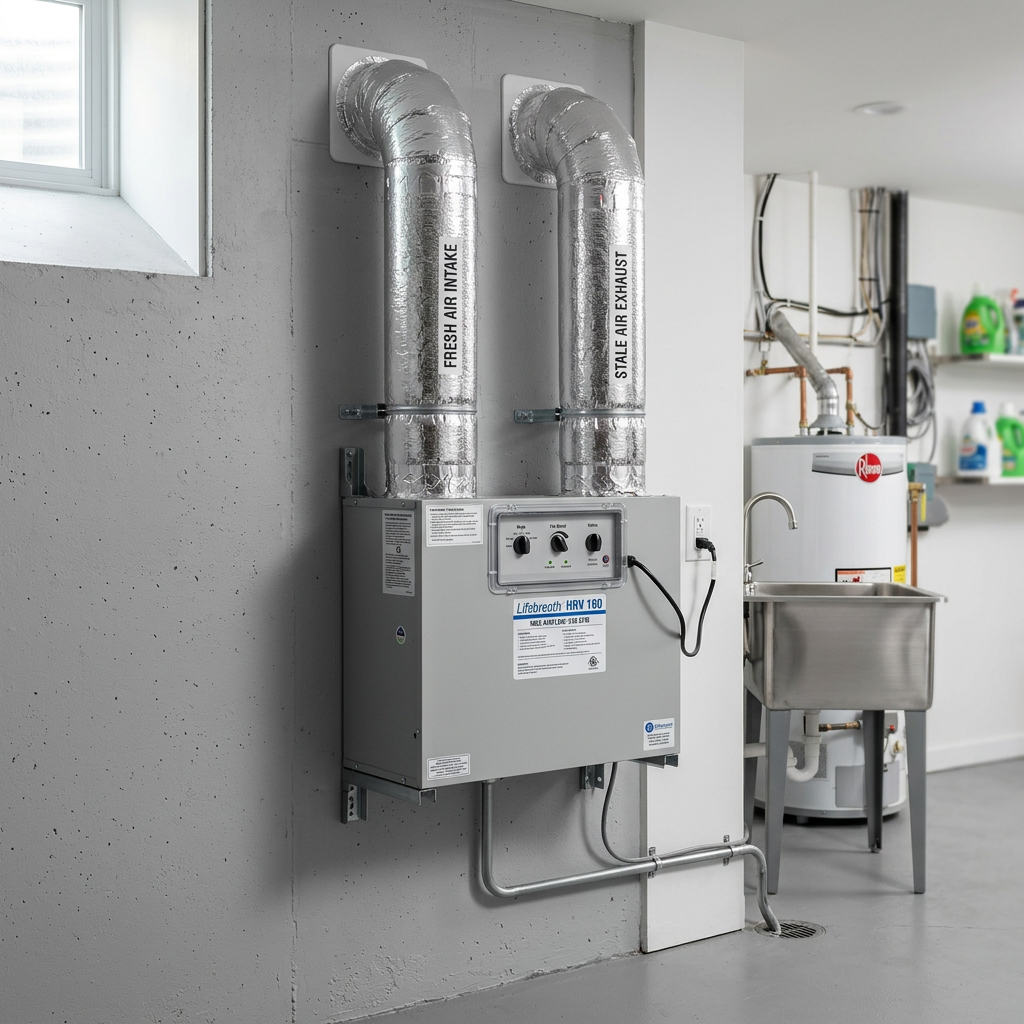
- A rectangular grey or white box in the utility room, basement, or mechanical room
- Two round insulated ducts passing through the exterior wall or rim joist
- A wall-mounted controller with humidity and speed settings
- Brand names like Venmar, Lifebreath, Broan, Fantech, or Daikin on the unit
If you're unsure whether a home you're buying has a functioning HRV system — ask your home inspector to specifically check it during the inspection. A non-functional or poorly maintained HRV is a legitimate negotiating point. For guidance on what to look for when buying, see my Buying in Winnipeg page or reach out directly.
HRV System Maintenance Tips
Every 3 months: Clean the two foam air filters (rinse with warm water, let dry fully). Clear exterior intake and exhaust hoods of snow, ice, and debris.
Annually: Remove and clean the heat exchange core (soak in warm soapy water, rinse, dry completely). Inspect all ductwork connections. Have an HVAC technician verify airflow balance.
Seasonal settings: In winter, run on low/medium speed and set humidity control to 30–40% RH. In summer, increase speed and adjust humidity settings based on outdoor conditions.
The Bottom Line
For Winnipeg homeowners, an HRV system isn't a luxury — it's a practical necessity in a climate where homes are sealed for up to five months of the year. The benefits in air quality, moisture control, and comfort far outweigh the costs for most households.
If your home doesn't have one, it's worth getting a quote. If it does, make sure it's being properly maintained — a neglected HRV system provides little benefit. Have questions about a home you're buying or selling and want to know if the HRV is up to par? Reach out anytime — I'm happy to help.