

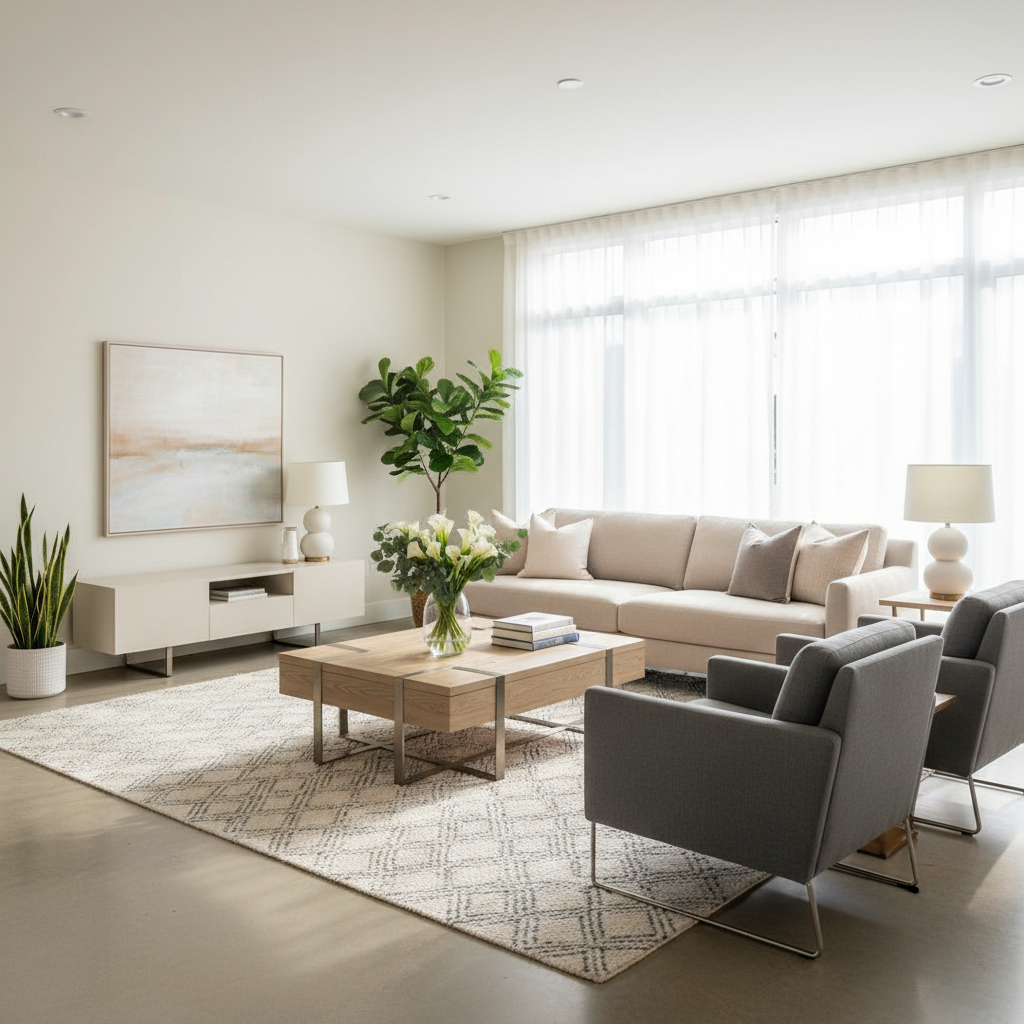
The Importance of Home Staging
Staging your home effectively can significantly impact how quickly it sells and the price you get. A well-staged home allows potential buyers to envision themselves living in the space, creating an emotional connection that can lead to faster offers and better terms.
Expert Staging Tips
Declutter and Depersonalize
Remove personal items and excess clutter to create a clean, neutral space that allows buyers to envision themselves living in the home. This includes:
- Family photos and personal memorabilia
- Excessive furniture that makes spaces feel cramped
- Collections and knick-knacks
- Visible storage items
Deep Clean
A spotless home gives a great first impression. Pay special attention to:
- Kitchens and bathrooms—these are critical areas buyers scrutinize
- Windows and window sills
- Floors and baseboards
- Light fixtures and ceiling fans
- Carpets and upholstery
Enhance Curb Appeal
The exterior is the first thing buyers see. Make sure:
- The lawn is well-kept and edged
- The driveway and walkways are clean and clear
- The front door is welcoming (consider a fresh coat of paint)
- Landscaping is tidy with fresh mulch and seasonal flowers
- House numbers are visible and attractive
Rearrange Furniture
Arrange furniture to create open, flowing spaces:
- Remove any bulky or unnecessary pieces that make rooms feel cramped
- Create conversation areas that showcase room functionality
- Ensure clear pathways through each room
- Angle furniture to make spaces feel larger
- Use appropriately sized furniture for each room
Neutralize Color Schemes
Use neutral colors for walls and decor to appeal to a broader range of buyers:
- Paint bold-colored walls in soft neutrals like beige, gray, or white
- Use neutral bedding and towels
- Add pops of color through accessories that can be easily changed
- Create a cohesive color palette throughout the home
Highlight Key Features
Draw attention to the home's best features:
- Architectural details like crown molding or built-ins
- Natural light—open curtains and clean windows
- Fireplaces—stage with tasteful mantel decor
- Updated appliances or fixtures
- Unique spaces like reading nooks or home offices
Set the Mood with Lighting
Proper lighting makes spaces feel warm and inviting:
- Use a mix of ambient, task, and accent lighting
- Replace dim bulbs with brighter, energy-efficient options
- Open blinds and curtains to maximize natural light
- Add lamps to dark corners
- Ensure all fixtures are clean and working
Add Fresh Touches
Small details can make a big difference:
- Fresh flowers or plants in key areas
- Fluffy towels in bathrooms
- Cozy throws on sofas
- A bowl of fresh fruit in the kitchen
- Subtle, pleasant scents (avoid overpowering air fresheners)
Don't Forget Storage Areas
Buyers will open closets and cabinets:
- Organize closets to show ample storage space
- Remove excess items to make storage areas look spacious
- Use matching hangers and storage containers
- Keep garage and basement areas tidy
Room-by-Room Staging Tips
Living Room
Create a comfortable, inviting space that shows how the room can be used for relaxation and entertainment.
Kitchen
Clear countertops of appliances and clutter. Show off counter space and create a clean, functional appearance.
Bedrooms
Create a serene retreat with hotel-quality bedding, minimal furniture, and calming colors.
Bathrooms
Keep them spa-like with white towels, clear counters, and sparkling fixtures.
Common Staging Mistakes to Avoid
- Over-personalizing the space
- Leaving rooms empty (shows lack of purpose)
- Using too much furniture
- Ignoring minor repairs
- Poor lighting
- Unpleasant odors
- Neglecting the exterior
Conclusion
Effective home staging is an investment that pays off with faster sales and better offers. By following these expert tips, you can present your home in its best light and help buyers fall in love with the property. Remember, the goal is to create a neutral, welcoming environment that allows potential buyers to imagine themselves living in your home. If you need professional staging advice or assistance, don't hesitate to reach out—I'm here to help you achieve the best possible sale.
Adapting Staging for Manitoba Seasons
Winnipeg buyers view homes through the lens of our extreme climate. During the long winter months, ensure your entryway is organized with heavy-duty mats to manage snow and salt debris. Proper lighting is essential during our short, dark winter days; replace all burnt-out bulbs with warm-toned LEDs to make rooms feel cozy rather than sterile.
When preparing for a spring or summer listing, focus on the transition between indoor and outdoor spaces. If you are Selling your Winnipeg home, ensure your backyard patio or deck is staged with comfortable seating to showcase the limited months we have for outdoor enjoyment. Even in modest lots, adding a potted plant or a bistro set helps buyers visualize seasonal relaxation.
The Psychology of Neutrality in Local Markets
In the Winnipeg real estate market, buyers are often looking for move-in ready properties that do not require immediate renovation. While personal items should be minimized, your staging should focus on highlighting the flow of your floor plan. If you are unsure how your current layout impacts your market position, you can utilize our home value tools to understand how presentation affects local pricing trends.
Avoid overly bold wallpaper or paint colors that could distract buyers from the structural bones of the house. Staging is fundamentally about depersonalizing the space to make it a blank canvas. By removing unique local memorabilia or family photos, you help the buyer mentally move into the property.
Curb Appeal and Timing Considerations
Your exterior must look its best to entice buyers to step through the front door. Ensure your lawn is mowed, driveways are swept of gravel, and your front step is free of peeling paint or ice. If you are weighing the market climate, consider reading When Should a Winnipeg Homeowner Sell? Timing Guide to align your property presentation with peak buyer activity in our region.
Consider the condition of your exterior siding and eavesthroughs, as these are often the first features checked by a home inspector. A clean, well-maintained exterior suggests to potential purchasers that the home has been meticulously cared for throughout its history.