

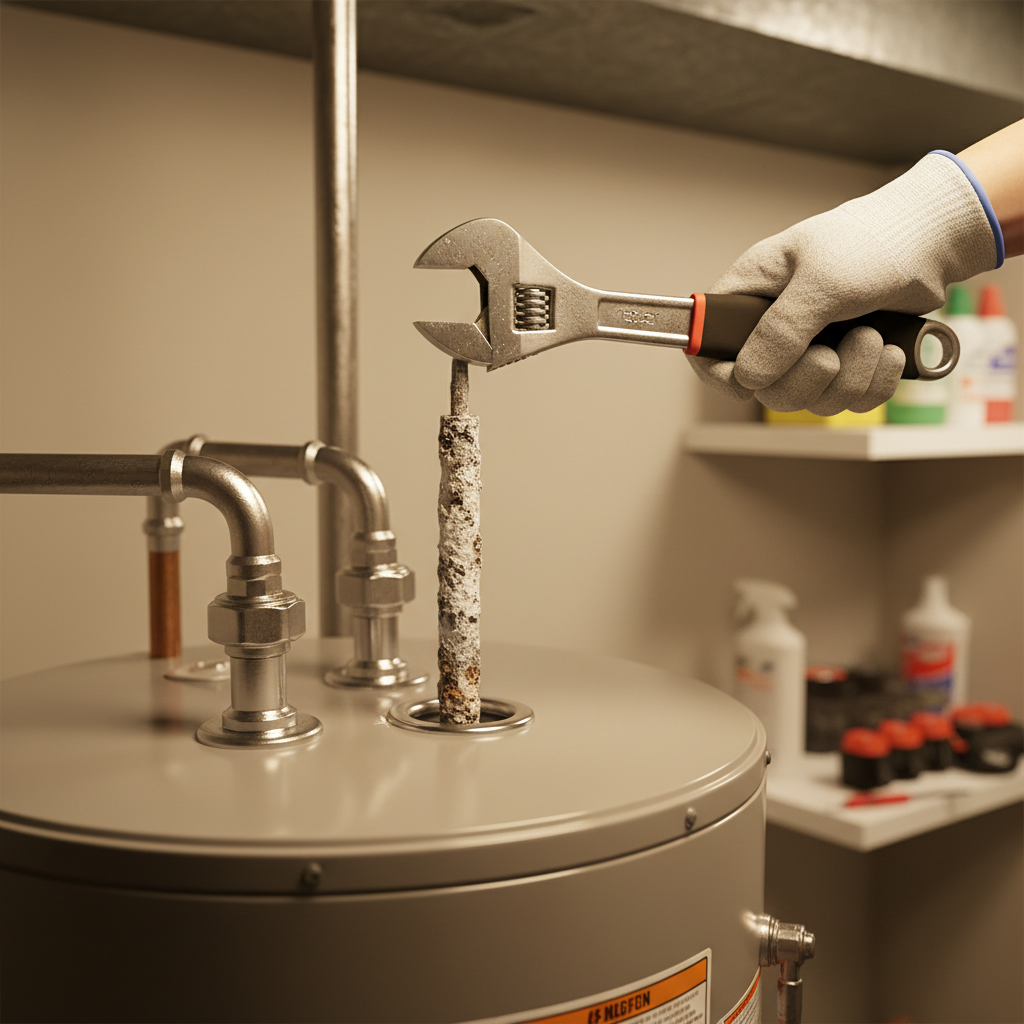
Hot water tank maintenance is one of the most overlooked — and most important — tasks a homeowner can perform. Most Winnipeg homeowners don't think about their water heater until it fails, usually at the worst possible moment. The reality is that with just two simple maintenance tasks performed every 1-2 years, you can extend your hot water tank's lifespan from the typical 8-10 years to 15 years or more — saving you $800 to $1,500 in replacement costs.
I recently completed full maintenance on my own hot water tank: draining the sediment and replacing the anode rod. In this guide, I'll walk you through exactly what's involved, why it matters, and what you should know as a home buyer or seller.
Why Hot Water Tank Maintenance Matters
Your hot water tank works 24 hours a day, 365 days a year. Two things silently destroy it over time:
- Sediment buildup — Minerals from your water supply settle at the bottom of the tank, reducing heating efficiency, increasing energy costs, and causing the tank bottom to overheat and crack.
- Internal corrosion — Water is inherently corrosive to steel. Without protection, the inside of your tank will rust and eventually fail, leading to leaks and water damage.
Both problems are preventable with routine hot water tank maintenance. Here's how.
Understanding the Anode Rod: Your Tank's Best Defense
The anode rod is the most critical component in your water heater's long-term health. It's a long metal rod — typically made of magnesium or aluminum — screwed into the top of your tank and submerged in water.
Its job is to sacrificially corrode: it attracts the corrosive minerals in the water so that your steel tank doesn't have to. Think of it as a bodyguard for your hot water tank.
When I pulled out my old anode rod, the before-and-after comparison was striking. You can see it clearly in the photo below:
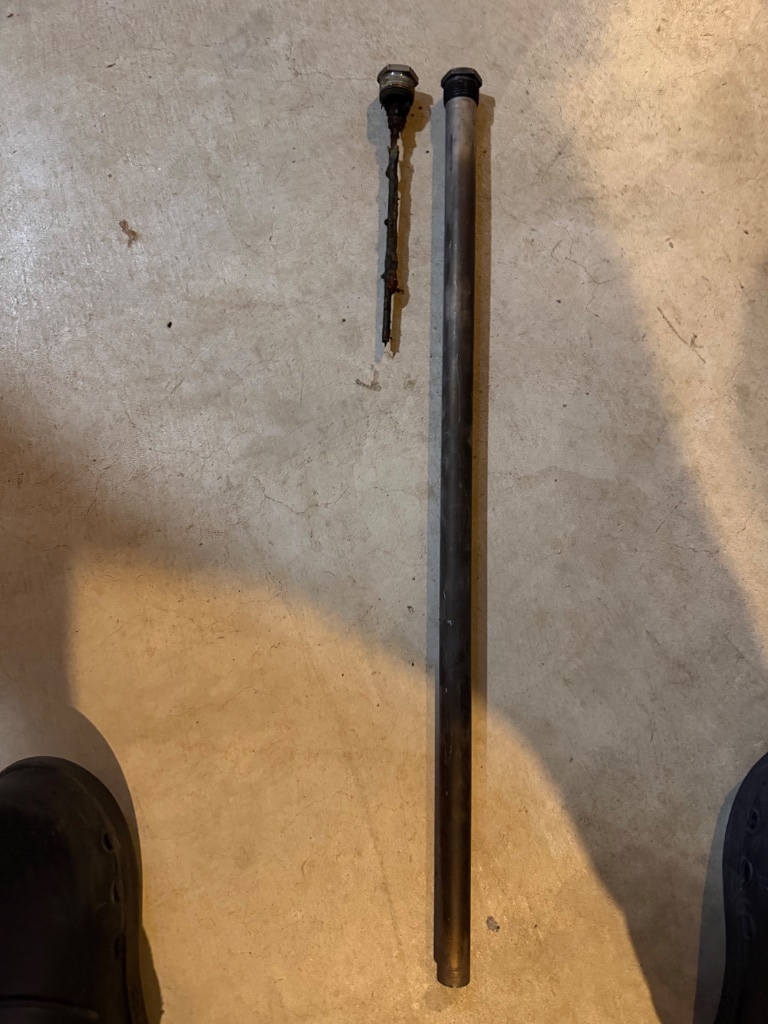
The old rod on the left has been reduced to almost nothing — a bare core wire with almost no magnesium material remaining. That's not a failure. That's the rod doing exactly what it was designed to do. But once the rod is gone, the corrosion turns to your tank walls. That's when you get rust-colored water, pinhole leaks, and ultimately a flooded basement.
Signs Your Anode Rod Needs Replacement
- The rod is less than ½ inch in diameter
- More than 6 inches of the steel core wire is exposed
- The rod has heavy calcium buildup
- Your hot water smells like rotten eggs (a sign the rod is depleted)
- It has been 3-5 years since the last replacement
The Hot Water Tank Maintenance Cycle
There are two core tasks in a complete hot water tank maintenance routine. Done together, they address both major failure causes: sediment and corrosion.
Task 1: Annual Tank Draining (15–20 Minutes)
Draining 2-3 gallons from the bottom of your tank once a year flushes out accumulated sediment before it hardens and becomes difficult to remove. Here's the process:
- Turn off power (electric) or set the gas valve to "Pilot"
- Connect a garden hose to the tank's drain valve
- Run the hose to a floor drain or outside
- Open the valve and drain until the water runs clear
- Close the drain valve, disconnect the hose, and restore power or gas
If you hear popping or rumbling sounds from your tank, sediment buildup is the likely cause. Annual draining eliminates this problem before it shortens the tank's life.
Task 2: Anode Rod Replacement (Every 3–5 Years)
Anode rod replacement is the most important hot water tank maintenance task most homeowners never do. Here's how to do it yourself:
- Turn off the power or gas and the cold water supply
- Drain 4-6 gallons from the tank to reduce pressure
- Locate the anode rod — typically on top of the tank, sometimes under a plastic cap
- Use a 1-1/16" socket and breaker bar to loosen and remove the old rod
- Wrap threads of the new rod with plumber's tape
- Thread in the new rod by hand, then tighten with the socket wrench
- Restore water supply and power/gas
Pro tip for Winnipeg homeowners: Many basement installations have low ceiling clearance above the water heater. In that case, buy a segmented or flexible anode rod — it installs in shorter sections and doesn't require as much overhead space.
How Often Should You Perform Hot Water Tank Maintenance?
| Task | Frequency | Time Required | Cost |
|---|---|---|---|
| Drain sediment | Annually | 15–20 min | $0 |
| Replace anode rod | Every 3–5 years | 30–45 min | $20–$50 |
| Test pressure relief valve | Annually | 5 min | $0 |
| Full professional inspection | Every 5 years | 1 hour | $100–$200 |
The Cost of Skipping Hot Water Tank Maintenance
Here's a straightforward comparison:
- Replacement anode rod: $20–$50
- Time spent on maintenance: 1 hour per year
- Emergency water heater replacement in Winnipeg: $900–$1,800 installed
- Water damage from a failed tank: $3,000–$15,000+
The math is simple. Spending $40 every few years to protect a major appliance is one of the highest-return maintenance tasks available to a homeowner.
Hot Water Tank Maintenance and Your Home's Value
Selling a Home in Winnipeg?
Water heater condition is a standard item on every home inspection report. A tank that's 10+ years old with no maintenance history will raise red flags for buyers and their agents. In contrast, documented maintenance — including anode rod replacement — signals that you've cared for the home and reduces buyer concerns about mechanical systems.
If your tank is aging, completing maintenance before listing is a low-cost way to strengthen your home inspection results and protect your sale price.
Buying a Home in Winnipeg?
Always ask the seller about the age and service history of the hot water tank. If it's 8 or more years old with no maintenance records, budget for a replacement within the next few years. A good buyer's agent will include this in your negotiation strategy.
During your home inspection, you can request that the inspector specifically note the anode rod condition — though this requires draining the tank, not all inspectors include this by default.
Frequently Asked Questions About Hot Water Tank Maintenance
How long does a hot water tank last with proper maintenance?
A well-maintained hot water tank can last 15–20 years. Without maintenance, most tanks fail within 8–12 years. Regular anode rod replacement and annual draining are the two biggest factors in extending tank life.
How do I know if my anode rod needs to be replaced?
If it's been more than 5 years since the last replacement, replace it. If you notice rust-colored hot water or a rotten egg smell, the rod may be depleted. When in doubt, pull it out and inspect it — a rod that's more than 50% consumed needs replacing.
Can I do hot water tank maintenance myself?
Yes. Annual draining is straightforward for most homeowners. Anode rod replacement requires a large socket wrench and some physical effort to break the rod loose, but it's well within DIY capability. If the rod is seized due to years of inactivity, that's when to call a plumber.
What type of anode rod should I buy?
Magnesium rods are best for areas with soft water. Aluminum rods are better for hard water areas. Winnipeg's water is moderately hard, so either works — check your tank manufacturer's recommendation if unsure. Combination rods (magnesium/aluminum alloy) are a safe middle-ground option.
The Bottom Line
Hot water tank maintenance is one of the few home improvement tasks where a small investment of time and money delivers an outsized return. Annual draining and anode rod replacement every 3-5 years are genuinely all it takes to keep your water heater running efficiently for 15+ years.
Whether you're a current homeowner protecting your investment, a seller preparing your home for market, or a buyer evaluating a property's mechanical systems — understanding hot water tank maintenance is practical knowledge that saves you money.
Have questions about a home's condition before buying or selling in Winnipeg? Let's connect — I'm happy to walk you through what to look for in a home inspection and how mechanical systems affect property value.