

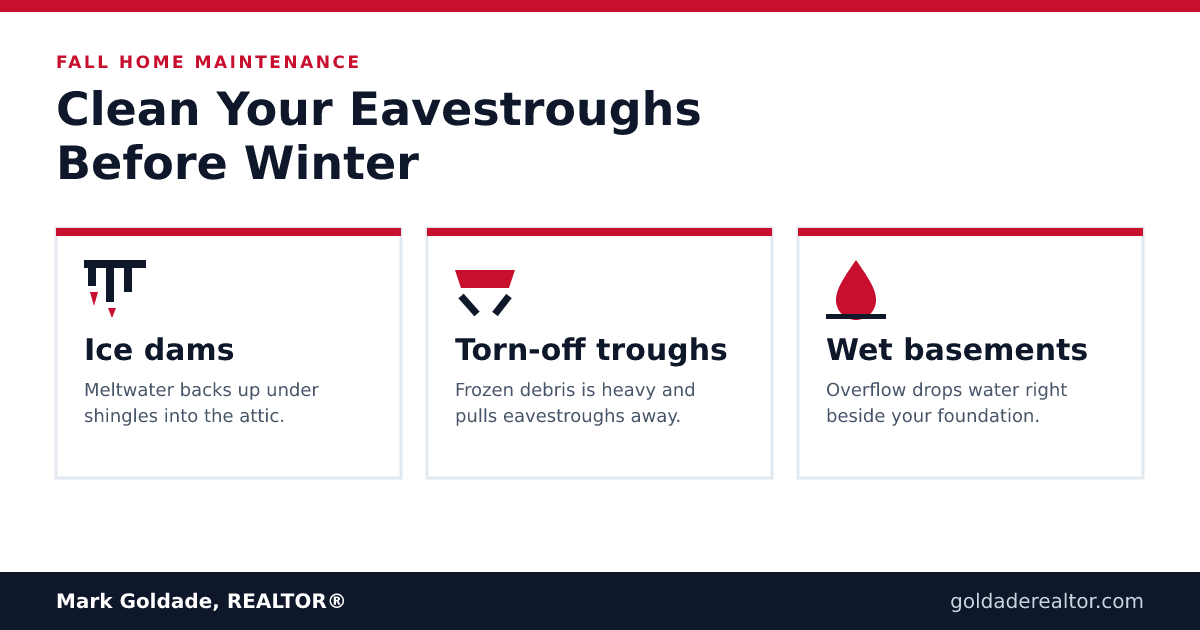
Of all the fall chores on a Winnipeg homeowner's list, clearing your eavestroughs is the one most often skipped, and one of the few that can save you real money. A clogged eavestrough does not look like much in October. By February, it can mean ice dams, torn-off gutters, a wet basement and a repair bill that was entirely avoidable.
This guide explains what your eavestroughs do, what happens when they are blocked going into winter, and how to clear them safely, or when to call a professional.
Why eavestroughs matter more in Winnipeg
Eavestroughs and downspouts have one job: collect water from the roof and carry it away from the house. In a mild climate, a blockage means water spills over the edge for a few weeks. In Winnipeg, a blockage in November can turn into a block of ice that sits on your roofline until April.
Our winters bring long stretches below freezing, repeated freeze and thaw cycles on sunny days, and heavy snow loads. Each melt sends water into the eavestroughs, and if the water has nowhere to go, it freezes again overnight. Add the clay soils common across Manitoba, which swell when wet and shrink when dry, and water that collects near your foundation becomes a bigger problem than it looks.
What happens if you do not clear your eavestroughs
Ice dams on the roof edge
An ice dam forms when snow on the upper roof melts, runs down to the cold edge of the roof and refreezes. Warm air escaping from the house is the main trigger, but eavestroughs full of leaves and frozen debris make it worse by holding water against the roof edge. The ice builds into a ridge that traps more meltwater behind it. That water can work its way under shingles and into the attic, ceilings and walls.
Bent, sagging or torn-off eavestroughs
Frozen water is heavy. A trough packed with wet leaves and ice can pull away from the fascia, bend or collapse, particularly on older systems. Replacing sections of eavestrough costs far more than a morning of cleaning.
Rot and damage to fascia and soffits
Water that overflows or backs up behind the eavestrough soaks the fascia boards and soffits. Over several winters, that moisture leads to rot, peeling paint and openings where pests and more water can get in.
Water at the foundation and in the basement
When the trough overflows, the water drops straight down beside the house instead of travelling away through the downspout. Repeated saturation next to the foundation can contribute to seepage, damp basements and, over time, movement and cracking. Our guides to proper drainage around your home and foundation cracks in Winnipeg homes explain how water and soil work against a foundation.
Icicles and ice on walkways
Overflowing eavestroughs create heavy icicles above doors and sheets of ice on steps and walkways below. That is a safety hazard for family, visitors and delivery people, and a liability concern if someone is hurt on your property.
Signs your eavestroughs are already blocked
- Water spilling over the edge during rain instead of running down the downspout.
- Plants or even small trees growing out of the eavestrough, which means leaves and soil have built up.
- Sagging sections or eavestroughs pulling away from the house.
- Dirty streaks or staining on the siding below the trough.
- Water pooling or soil washing out near the foundation after rain.
- Peeling paint or soft, dark wood along the fascia.
How to clear your eavestroughs safely
- Pick the right day. Wait until most of the leaves have come down, then clean on a dry, calm day. In Winnipeg, aim for late October or early November, before the ground freezes and snow arrives.
- Use a stable ladder and a spotter. Set the ladder on firm, level ground, keep three points of contact, and never lean past your shoulders. If your roof is steep or very high, skip this step and hire a professional.
- Scoop out the debris. Wear gloves and use a small scoop or gutter trowel to remove leaves, shingle grit and mud into a bucket, not onto the lawn where it will wash back.
- Flush with a hose. Run water from the far end toward the downspout to check the flow. If it pools or backs up, there is a clog or a sag in the run.
- Clear the downspouts. Tap along the downspout and flush it. A stubborn blockage can often be pushed out with a hose or a plumber's snake.
- Check the hardware. Look for loose hangers, open seams and rusted joints, and fix small problems now rather than after a freeze.
If snow is already on the ground when you read this, do not climb up onto ice or snow. Wait for a mild day, or book a professional, and avoid chipping ice out of the trough, which can damage it.
Downspouts, grading and ice dam prevention
Clear eavestroughs only help if the water ends up somewhere safe. Extend downspouts so water discharges several feet from the foundation (many guides suggest at least 1.8 metres, or about six feet) and confirm that the soil slopes away from the house. A downspout that drains onto a driveway or sidewalk will make an ice patch, so aim it at a lawn or garden bed.
To reduce ice dams over the long run, look beyond the trough. Good attic insulation and air sealing keep warm air from heating the roof deck and melting the snow in the first place. If you have had ice dams before, an insulation or roofing contractor can assess your attic. Our winterizing guide and winter prep checklist cover the other fall jobs that go with this one.
When to hire a professional
Hire help if your home is more than one storey with steep or slippery rooflines, if the eavestroughs are badly damaged or pulling away, or if you are not comfortable on a ladder. A professional eavestrough cleaner usually works quickly, checks the downspouts and can spot early signs of rot or failing hardware. Ask for proof of liability insurance and workers' compensation coverage before anyone climbs onto your roof.
It is also worth checking your home insurance policy. Coverage for water damage varies by insurer and by cause, so ask your broker what is and is not covered, and whether maintenance is a condition.
Why it matters if you plan to sell
Buyers and home inspectors look at the roofline, the eavestroughs and the way water drains around a house. Staining, sagging troughs, rotted fascia and damp basements are common items in inspection reports, and they can lead to repair requests or price negotiations. Clean, working eavestroughs and well-directed downspouts are a small, inexpensive way to show a property has been cared for. If you are thinking about selling, see how I prepare Winnipeg homes for market, or contact me for a straightforward conversation about timing and preparation.
General information only. Roof, eavestrough and insurance situations vary by home, so confirm specifics with a qualified contractor and your insurer. Never climb onto a snowy or icy roof or ladder.
Related reading: Winterizing your Winnipeg home, Proper drainage around your home.